Ten Holocaust survivors who have made it their mission to educate younger generations about the dangers of antisemitism and racism were honoured by the Ontario government in a virtual ceremony on Nov. 5.
The annual ceremony, usually held at Queen’s Park, was scheduled for last spring but postponed due to COVID. This year’s virtual event was held during Holocaust Education Week, Nov. 2-9.
The theme of this year’s event was “passing the torch” – fitting, given that the honourees were all speakers at the Neuberger Holocaust Education Centre and had dedicated hours to talking to students about their experiences, said Fran Sonshine national chair of the Canadian Society for Yad Vashem, in remarks that were recorded earlier at the Holocaust memorial in Toronto’s Earl Bales Park.
This year’s honorees were Hedy Bohm, Esther Fairbloom, Pola Goldhar, Denise (Fikman) Hans, Mark Lane, Faigie (Schmidt) Libman, Rose Lipszyc (née Handelsman), Captain Martin Maxwell, Andy Réti and Gershon Israel Willinger.
Each honoree had received a certificate, often surrounded by their children and grandchildren, in outdoor ceremonies recorded earlier.
The survivors spoke briefly, often thanking Canada for taking them in after the Second World War, and giving them a second chance to build a life – and about the importance of teaching young people about the Holocaust.
“I hope in the future to continue Holocaust education,” said Bohm. “My goal has been and always was to make young people feel empowered to stand up and speak against any type of prejudice.”
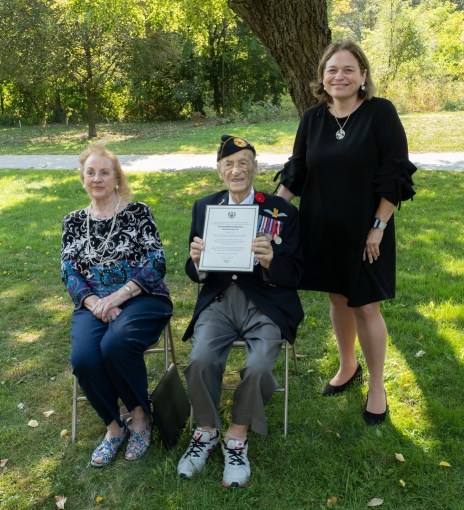
Debbie Estrin of the Canadian Society for Yad Vashem presents a tribute from the government of Ontario to Capt. Martin Maxwell. Looking on is Maxwell’s wife, Eleanor. (Photo courtesy Canadian Society for Yad Vashem)
MPPs Roman Baber, Will Bouma, Rima Berns-McGown, Gila Martow, and Steven Del Duca, leader of the Liberal Party of Ontario, introduced each honoree.
Premier Doug Ford praised the honourees’ “unbelievable bravery,” saying their “resilience and strength continue to inspire me.”
Galit Baram, consul general of Israel in Toronto and Western Canada, and a descendant of Holocaust survivors, spoke about the “alarming rise” of antisemitism, assaults and Holocaust denial, even in democratic, western societies.
“What I have to come to realize is that the Sisyphean task of combating antisemitism necessitates continuous activity on three levels: legislation, prosecution and education,” Baram said in her remarks.
“Every time elected officials speak up against antisemitism and draw the line between what is acceptable and what is not, every time a Holocaust survivor provides testimony, every time a story of the Righteous Among the Nations is told in public, every step brings us closer to developing an antidote to hatred and racism,” Baram said.
Holocaust heroes and survivors. Mossad spies. Infamous Nazis. Wealthy Jews who once controlled Shanghai.
These and other inviting subjects are set to be explored at Hamilton’s Jewish Book Fair and Holocaust Education Week.
Usually separate events, the celebration of Jewish books and Shoah memorial has been combined into a series of online programs this year.
Gustavo Rymberg, CEO of the Hamilton Jewish Federation, said that in the age of COVID, merging the events made sense.
“Instead of asking people to register separately for both events we’d do them together,” he told the CJR. “It’s also a chance for some of our young families to get familiar with Holocaust Education Week.
“We think it’s important for our young people to learn about that now and not wait for a teacher to bring it up in school,” he added.
“Everyone has a responsibility to talk about the Holocaust, not only in educational settings but conversations need to take place at home. It is shocking that a large number of young Canadians are unaware that over six million Jewish men, women and children were killed during the Holocaust.”
The plan for this year is to centre around nine books – five during book festival events Nov. 1-4 and four during Holocaust week, Nov. 8-12.
Leading off the book festival is Jonathan Kaufman presenting on his book The Last King of Shanghai. It chronicles the moral compromises, foresight and generosity of two extraordinary Jewish families – the Sassoons and the Kadoories – who ruled over Chinese business and politics for more than 175 years.
Both originally from Baghdad, they profited from the Opium Wars that tore China apart and then survived the communist takeover of the country.
Now the director of the School of Journalism at Northeastern University in Boston, Kaufman spent 30 years and won a Pulitzer Prize covering China for the Boston Globe, Wall Street Journal and Bloomberg News.
In an interview, Kaufman said the idea for the book was born in the late 1970s when, newly arrived in China, he began to see traces of a century of Jewish influence on the country.
In addition to being a story of wealth and power, Kaufman said the book adds an important piece to our understanding of Jewish history.
“We tend to think of Jewish history as the stories of poor European immigrants who work hard and rise to great heights,” he said. “This is another part of the history of Jews who also worked hard and climbed to great heights.”
Kaufman is also the author of A Hole in the Heart of the World: Being Jewish in Eastern Europe and Broken Alliance: The Turbulent Times Between Blacks and Jews in America, which won a National Jewish Book Award.
The book festival will also include presentations on Red Sea Spies, the true story of the Mossad operation that used a diving resort on the coast of Somalia as a cover to rescue thousands of Ethiopian Jews and smuggle them to Israel. The book was written by long-time BBC Middle East correspondent Raffi Berg.
On Nov. 2, former New York Times reporter Howard Blum will discuss his book Night of the Assassins: The Untold Story of Hitler’s Plot to Kill FDR, Churchill and Stalin. It’s the true story of a Nazi plot to destroy the leaders of the Allies during their Tehran conference in 1943. With their leaders dead, the German hope was that the stricken Allies would then be willing to make peace with the Third Reich.
Concealed, to be presented Nov. 3 by author Esther Amini, tells the story of her struggles growing up in Queens, N.Y. in the 1960s – the daughter of Jewish-Iranian refugees trying to find a balance between her parents’ traditions and her longing for American freedom.
The final book festival presentation is slated for Nov.4. The title for that night will be Nobody Will Tell You This But Me, Bess Kalb’s recounting of family lore and secrets from her grandmother chronicling the lives of four generations of women and the men who loved them.
Holocaust Education Week events kick off Nov. 8 with a presentation of Toronto author Kathy Kacer’s true story, The Brushmaker’s Daughter.
It tells the tale of a 12-year-old German-Jewish girl and her blind father on the run from the Nazis. They are sheltered by brush factory owner Otto Weidt, who employs blind Jewish workers in his factory, determined to save as many as he can.
Kacer, a former psychologist, has written often about the Holocaust and the people who struggled against it. In an interview, she said “as soon as I heard about this, I knew it would be the next story I would tell. The example of individuals who exhibit that kind of moral strength is a great one, especially today. Capturing stories like this is even more important today. We still have a small window of opportunity today to capture those stories.”
Kacer added that while the central character of the story is fictional, Weidt and his factory are historical. Weidt and all the people he helped are now dead but the factory itself survives and has been turned into a museum.
Capturing Holocaust stories, she added, is important because her parents were both survivors: Her mother hid during the war while her father survived a concentration camp.
On Nov. 9, author A. J. Sidransky will discuss his novel The Interpreter, the story of a 23-year-old American G.I. Kurt Berlin, who returns to Europe to help interrogate captured Nazis as part of a program to recruit them to work against the Soviet Union in the coming Cold War.
Former Nazi hunter David Marwell will discuss his book Mengele: Unmasking the “Angel of Death” on Nov. 10. The book explores how an ambitious researcher could become a faithful servant of the Nazi cause.
Marwell served as chief of investigative research at the U. S. Justice Department’s Office of Special Investigations in the 1980s and worked on the hunt for the notorious “Angel of Death” Dr. Josef Mengele.
The final book presentation for the week is slated for Nov. 12, when journalist Peter Ross Range will discuss The Unfathomable Ascent, his detailing of Adolf Hitler’s eight-year march to the pinnacle of German politics.
Holocaust Education Week also incorporates the virtual exhibit Vad Vashem: Shoah: How Was it Humanly Possible, and the Nov. 15 special presentation Voices of our Holocaust Survivors with young Hamiltonians interviewing Holocaust survivors.
Times and details for all events are available at https://jewishhamilton.org/2020jewishbookfestival
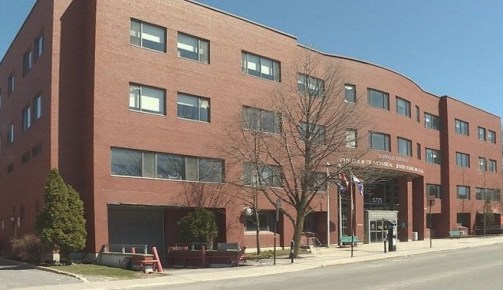
MONTREAL— Families of residents of the long-term care institutions Maimonides Geriatric Centre and Jewish Eldercare Centre, which were hard-hit by COVID this spring and summer, are pleading with health officials to halt a plan to admit outside patients with the virus to recuperate in those facilities.
Jewish Edlercare
“My initial reaction was, ‘What are they thinking?’” Helen Adam, president of the users’ committee at Maimonides, told the CJR. At the outbreak’s worst, one-third of Maimonides’s 380 residents were infected and 39 would die, in addition to the staff members who tested positive. It took reinforcement by members of the Canadian Armed Forces and then the Red Cross to get the situation under control.
Eldercare had an even more difficult time from the outset of the pandemic in March, and lost more residents.
On Oct. 19, CIUSSS West-Central Montreal, the government health agency that administers Maimonides and Eldercare, informed families that there were no longer any COVID cases among residents and that the “hot zones” at both sites would, if necessary, accommodate certain people with the virus who live in the geographic territory served by the CIUSSS.
The email, signed by Barbra Gold, director of the CIUSSS’s Support Program for the Autonomy of Seniors, states that these beds would be for “COVID-positive patients who are medically stable (do not require hospitalization) but require a greater level of care than what is being offered at their current locations, such as private seniors’ residences, intermediate resources or those recovered in hospital who are not strong enough to go home.”
To date, no such transfers have been made and Gold noted that “every effort” is being made to keep such patients where they are. She added, “We are confident that this approach will not compromise the health and well-being of our residents and is in the best interest of the community we serve.”
Adam said families are flabbergasted that after waging such a lengthy battle to contain the virus – which included stopping visits for months and moving residents to different rooms and makeshift spaces to separate the infected from those who were not – the two institutions are now being opened to ill people from the community.
At Maimonides, the hot zone is located in part of the uppermost seventh floor. Adam said she is fearful that staff will inevitably move to other areas of the building despite the best intentions.
“I think Quebec has gone out of its mind. They try one thing one week and another the next. Now it looks like they are setting us up as an adjunct to the hospitals. People are so scared and confused,” said Adam.
Asked by the CJR to respond, the CIUSSS emailed a statement that those with COVID will be moved “only as a last resort” and with extra precautions.
“If and when any COVID-positive individuals arrive at the facility, they will not come into contact with uninfected residents. They will be put into designated hot zones that are separated by permanent walls from the other residents and the other units,” it said.
“They and the staff who care for them will also use designated elevators that will be unavailable to other residents and personnel. As well, they will receive care from dedicated members of the staff—in other words, the COVID-positive person or their health care provider should not have any contact with the other residents, caregivers or health care teams at Maimonides or Jewish Eldercare.”
West-Central Montreal adds that, “like every CIUSSS throughout the province, we are required to provide residents in our area with emergency spaces in a non-traditional site, such as a long-term care centre.”
This is not reassuring to Maimonides resident Beverly Spanier. The retired high school teacher is afraid of another COVID outbreak and has little confidence in the institution’s ability to deal with it.
“This is supposed to be our home, not a hospital,” she said, still traumatized by the upheaval that took place earlier this year. “We’ve already been through hell. I don’t want to live in a war zone again.”
In a letter to Premier Francois Legault, the users’ committee says a “highly vulnerable population” is being put at risk and suggests an alternative. “There are many virtually empty hotels, who would probably welcome the work. Why not use them?
“We appeal to you M. Legault to rethink this directive.”
The committee has also reached out to the Conseil pour la protection des malades, a group defending the rights of users of the health care system.
Adam’s mother, who lived for six years at Maimonides, died in May, but not of COVID. Adam thinks many residents’ passing, including her mother’s, was due to the loneliness and stress caused by the pandemic restrictions. She did not see her mother in person from mid-March until just before her death when she was allowed to visit on compassionate grounds.
She does not want that to happen again to any other residents or their relatives.
By the official count, more than 6,100 people in Quebec have died of COVID, the great majority of them residents of nursing homes or seniors’ facilities.
In a year characterized by increased antisemitism frequently linked to COVID conspiracy theories and social unrest caused by the lingering effects of systemic racism, it seemed only natural that Holocaust Education Week 2020 would tackle some of the the underlying conditions that contribute to such activities. In a quickly changing world, it is more relevant than ever that we understand the role Holocaust education can and does play in fostering an inclusive society that respects all Canadians.
Holocaust Education Week (HEW) runs Nov. 2-9 with programs continuing throughout the month. This year’s theme, Hindsight 2020, developed by UJA’s Neuberger Holocaust Education Centre, the organizer of the event, aims to do just that. By reflecting on the role that Holocaust education has played in our community, and promoting best practices in education that encourages deep learning, a solid foundation is laid for dealing present day challenges.
Now more than ever, nurturing Canadian civil society through the lessons of the Holocaust is a vital goal of HEW.
In response to the pandemic, the Neuberger has transformed Holocaust Education Week into a digital experience continuing throughout the year. By partnering with the Virtual J, programs will be presented live, free of charge and available for viewing on-demand long after the conclusion of each presentation.
Dara Solomon, the Neuberger’s executive director, commented on the new format: “Partnering with the Virtual J extends the reach of our programming to diverse audiences everywhere. Now, anyone with internet access can learn about the Holocaust wherever they live, at any time of day assured that the programming is built on the best and highest pedagogical standards,” she said.
HEW’s opening night unpacks the theme with American journalist Yair Rosenberg addressing the role Holocaust education and memory play in combatting the threats of contemporary antisemitism, prejudice, and fascism. He and Canadian journalist Sarah Fulford, editor-in-chief of Toronto Life magazine, will respond to some of today’s most pressing questions, including how and where does Holocaust education fit in to our current situation, and what have we learned from the Holocaust as a society that can better inform our future and point us towards a more just, equitable, and peaceful world?
A carefully curated film series that delves deeply into this year’s theme runs from November until next April. Each screening features special guest speakers, such as actor George Takei of Star Trek fame. As a child, Takei, along with other North Americans of Japanese heritage, was subject to forced relocation to internment camps during the Second World War. He has written a graphic memoir about his childhood experiences, titled They Called Us Enemy, which is an important entry point into learning about how our countries responded domestically while fighting fascism in Europe.
Takei’s personal insights provide yet another aspect of how the Second World War affected Canadians and Americans.
“For Canadians grappling with what our nation’s wartime conduct means, it helps provide a more complete picture and encourages dialogue on the significance of human rights in today’s civil society,” said Solomon.
Another not-to-be-missed program features philosopher and cultural commentator Susan Neiman, who will share her insights into grappling with the past and its significance with respect to contemporary memorial culture. A three-part Neuberger book talk series is devoted to her recent publication Learning from the Germans. Guest presenters are featured weekly and the series culminates with a discussion with Neiman.
HEW’s closing program will feature Holocaust survivor Pinchas Gutter’s personal reflections on the impact of Holocaust education and remembrance. Gutter, has spoken internationally about his Holocaust experiences, published his memoirs Memories in Focus with the Azrieli Foundation, and was one of the first to be interviewed for the USC Shoah Foundation’s Dimensions in Testimony program.
In conversation with the Neuberger’s Education Coordinator, Michelle Fishman, herself the granddaughter of Holocaust survivors, Gutter will expand on the role and power of education in combatting inequality, racism, fascism, and antisemitism.
A special tribute marking the 82nd anniversary of Kristallnacht, when a wave of violent anti-Jewish pogroms rampaged across Nazi Germany on Nov. 9 and 10, 1938, is also part of this program.
Visit the Neuberger’s website www.holocausteducationweek.com for a complete listing of all programs.
Carson Phillips, PhD, is Managing Director of the Neuberger Holocaust Education Centre of UJA Federation of Greater Toronto
Faced with continuing COVID hardships, Holocaust survivors, including those in Canada, will see a rise in their benefits from Germany.
The increases were announced this month by the New York-based Conference on Jewish Material Claims Against Germany, or the Claims Conference.
They result from the organization’s most recent negotiations with the German government on behalf of Holocaust survivors.
A statement from the Claims Conference to the CJR notes that there are currently 1,600 survivors in Canada who receive pensions from Germany that are administered by the Claims Conference. The current benefit of €513 (CAD $800) per month will increase to €580 (CAD $900) a month as of Jan. 1, 2021.
The most recent negotiations also resulted in two supplemental payments, each of €1,200 (about CAD $1,860), for survivors eligible under the conference’s Hardship Fund. The payments will be made in each of the next two years, for a total of €2,400 (CAD $3,725).
The Claims Conference estimates that approximately 5,000 Holocaust survivors in Canada will be eligible for supplemental payments under the Hardship Fund.
Additionally, the German government will directly provide to spouses of so-called BEG payment recipients who died after Jan. 1, 2020, and do not get a BEG spouse pension, a “transitional payment” of up to nine months. Some residents of Canada qualify for this program.
As for funds the Conference allocates to Jewish social service agencies in Canada for the welfare of Holocaust survivors, “we are assessing needs now and will have a final result by year’s end,” said a spokesperson.
For 2020, the Conference allocated over CAD $37 million for homecare, food, medicine, transportation, programs to alleviate social isolation, and other services. The recent negotiations resulted in a €30.5 million increase (approximately CDN $47 million) over last year in funding for social welfare services for Holocaust survivors.
“These increased benefits achieved by the hard work of our negotiation’s delegation during these unprecedented times will help our efforts to ensure dignity and stability in survivors’ final years,” said Gideon Taylor, President of the Claims Conference.
The COVID pandemic “has adversely affected the elderly, and survivors have faced an onslaught of health, emotional, and financial hurdles,” the Conference stated in a recent news release.
The Conference estimates that approximately 240,000 survivors will be eligible for these additional payments. The largest populations reside in Israel, North America, the former Soviet Union, and Western Europe.
In the negotiations with the Claims Conference, the German government agreed to expand the categories of survivors receiving direct compensation. Specifically, Germany accepted the results of the U.S. Holocaust Memorial Museum regarding “open ghettos” in Bulgaria and the report from Yad Vashem on “open ghettos” in Romania, which together recognized 27 specific places as ghettos, thus enabling survivors of those places to receive compensation payments.
MONTREAL – The weakening of American democracy and status of the United States globally is “bad for the Jews,” whose flourishing has been tied to the country’s founding ideals, says Jeffrey Goldberg, editor-in-chief of The Atlantic magazine.
Jeffrey Goldberg
The influential journalist offered a bleak assessment of the state of America in a virtual lecture hosted by Congregation Shaar Hashomayim on Oct. 13, and he placed the blame squarely on President Donald Trump.
Trump’s mishandling of the COVID crisis has not only been disastrous for Americans, but accelerated the United States’ waning prestige in the eyes of its allies and those who hold it as a model, Goldberg said.
“The last four years have been a slow-rolling catastrophe that has profound consequences for the world…I think it is too early to say that America is in a kind of decline, but it is on a downward slope and headed to a bad place if we are not careful,” he said.
Undemocratic China, Russia and Iran are moving in to fill the vacuum left by the U.S.’s retreat from dominance, he said, and these countries are not “models of good behaviour.”
The trend is “not irreversible,” though Goldberg stopped short of predicting the outcome of the Nov. 3 election.
If Democratic candidate Joe Biden wins, Goldberg’s advice to him is to first get control of the coronavirus. “We will have no respect in the world unless we do that.”
Then, Biden should set about repairing the country’s reputation by going to its friends and essentially apologizing for what had been a “weird” episode in American history, he thinks.
The U.S. can and should resume its “exceptional role” in the world, Goldberg believes.
“Trump could have coasted to re-election if he had taken the virus seriously and gotten it under control,” he said. Instead, Goldberg regrets that his country has been “a sad joke over the past four years.”
The U.S. is accustomed to sometimes being hated or feared, but not to being “pitied” as it is today, especially in Europe, said Goldberg, who finds it shocking that a country so advanced could account for one-fifth of the world’s COVID deaths but only 4.25 percent of the population.
The situation is particularly worrisome for Goldberg because the “American dream is very much intertwined with the Jewish dream,” and the loss of the former puts the future of the latter in doubt.
“Historically, extremism and polarization have been bad for the Jews,’’ he said. The bitter fracturing between the political right and left, and the pitting of racial groups against each other do not bode well for the community, Goldberg said.
Trump, whom he called a racist and xenophobe, became president because he appealed to white reactionaries frightened by the change in the country’s racial makeup.
American Jewry represents almost half of the world’s Jewish population, he pointed out. A diminished U.S. is also not good for Israel, for which the United States has been a “blessing,’’ he added.
Even Jews in Canada are affected, he suggested.
“The Canadian Jewish community is unusually unified and organized, but it is still small. It benefits from having happy, secure brethren to the south.”
Goldberg was praised for being “fiercely courageous” by Lewis Dobrin, co-chair of the Shaar’s Tuesday Night Learning series, of which this talk was a part. He referred to Goldberg’s “bombshell” article in The Atlantic in September reporting that Trump had called American war dead “losers” and “suckers” during a 2018 visit to a French military cemetery – a report the president vehemently denied.
Shabbat Shalom and welcome to “Kitchen Talk,” the weekly food blog of the CJR. The High Holidays are over, the weather is changing, and COVID case numbers in Toronto are on the rise, so I’m bracing for a long and not very social winter.
We had what was probably our last family dinner for a while on Thanksgiving. We ate lunch in the backyard, wearing our jackets to stay warm.
With the colder weather starting, I’ve also been in the mood for warming foods like hardy soups and starchy side-dishes. Comfort food may be good for the soul, but maybe not so good for the hips.
The recipes I’ve chosen this week are hardy and healthy. The three soup recipes can be easily paired with salad or some fresh bread for a complete meal.
Cookbook author and national food columnist Bonnie Stern shared some lovely fall recipes in her latest newsletter at: http://foodnews.bonniestern.com.
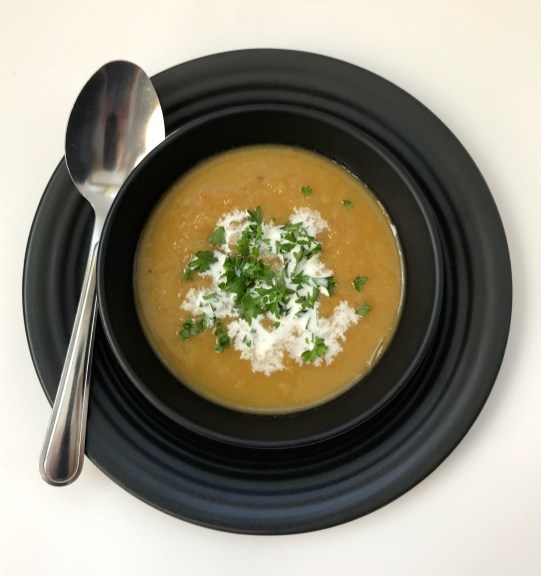
I tried the Lentil Squash Soup, which was delicious. As a garnish, I used parsley from my garden instead of cilantro.
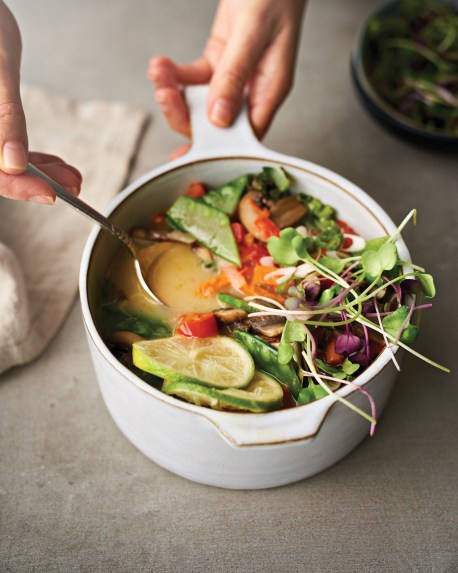
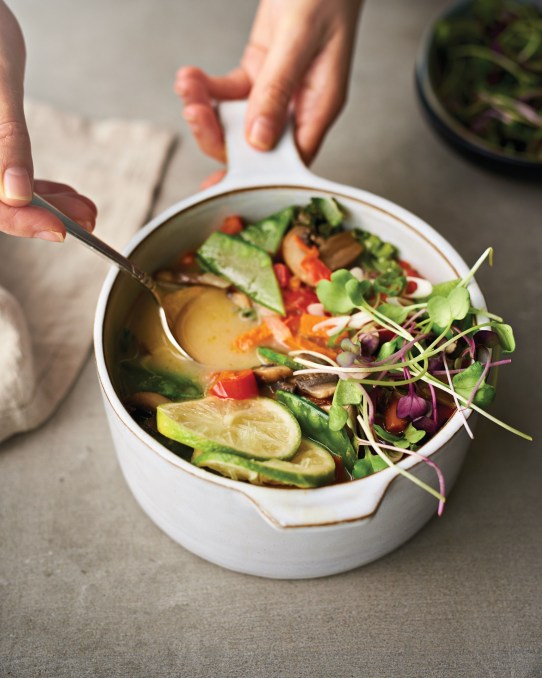
The Thai Coconut Soup comes from The Living Kitchen: Healing Recipes to Support Your Body During Cancer Treatments and Recovery by Tamara Green and Sarah Grossman.
I found the Mushroom Cauliflower Soup recipe in The Silver Platter Simple Elegance: Effortless Recipes with Sophisticated Results. This cookbook was written by Daniella Silver, with tips and techniques by the late food maven Norene Gilletz.
LENTIL SQUASH SOUP Bonnie Stern
2 tbsp (30 ml) extra virgin olive oil 1 onion or leek (trimmed and well-cleaned), chopped 1 clove garlic, finely chopped 1 inch (3 cm) piece fresh ginger root, peeled and finely chopped 1 tsp (5 ml) curry paste 1½ lbs (650 g) winter squash (e.g. butternut, buttercup, acorn, kabocha), peeled and cut into about 1-inch (2½ cm) chunks, approximately 4–5 cups (1¼ L) ¼ cup (60 ml) red lentils 4 cups (1 L) water (or vegetable broth) + more if necessary 1 tsp (5 ml) kosher salt plus more to taste 1 tbsp (15 ml) lime or lemon juice ½ cup (125 ml) coconut milk or whipping cream, divided (optional)
Gently cook the onions or leeks and garlic in olive oil until tender, about 5 minutes. Add the ginger and curry paste and cook for 1–2 minutes.
Add the squash and lentils and combine well. Add the water or broth and bring to a boil. Add salt. Cook 25–30 minutes until the squash is very tender and the soup has thickened.
Puree the soup with an immersion blender or food processor or blender. Return the soup to the heat and stir in the lime juice and half the coconut milk or cream. Taste and adjust the seasoning.
To serve, top the soup with pumpkin seeds, cilantro and a drizzle of the remaining coconut milk or cream. Makes 6 servings.
THAI COCONUT SOUP Tamara Green and Sarah Grossman
1 tbsp (15 ml) virgin coconut oil 1 small yellow onion, chopped 1½ inches (4 cm) ginger root, peeled and finely chopped 2 cloves garlic, minced 1½ cups (375 ml) de-stemmed, cleaned and chopped brown cremini mushrooms 2 carrots, peeled and chopped 1 red pepper, chopped 14 oz (398 ml) can full-fat coconut milk 3 cups (750 ml) chicken, bone or vegetable broth 1 cup (250 ml) snow peas, sliced in half lengthwise ¼ cup (60 ml) fresh cilantro, finely chopped 1 lime, juiced 2 tsp (10 ml) tamari
Optional proteins: 2 small chicken breasts, or 1 cup (250 ml) cubed organic tofu, or 2 5-oz (140 g) portions of cod.
Place a large pot over medium heat and add the coconut oil and the onions. Sauté the onions for 5 minutes, or until translucent and soft. Add the ginger, garlic, mushrooms, carrots and red peppers and sauté for 3 minutes.
Pour in the coconut milk and broth. Add the optional proteins. Cover the pot, bring to a boil and simmer for 25 minutes, or until the vegetables and protein are cooked. Add the snow peas and simmer for 2 more minutes.
If chicken or cod is included, remove from the broth, shred or flake into small pieces and put back into the soup. Garnish with fresh cilantro, lime juice and tamari. Serve hot. Makes 4–5 servings.
MUSHROOM CAULIFLOWER SOUP Daniella Silver
1–2 tbsp (15–30) oil 1 large onion, diced 4 cloves garlic, minced, about 2 tsp (10 ml) 6 cups (1½ L) button mushrooms, sliced 1 large head cauliflower, cored, cut into small florets 6 cups (1½ L) water or vegetable broth 2 tsp (10 ml) kosher salt Freshly ground black pepper 1 tsp (5 ml) minced fresh thyme leaves, plus additional whole thyme leaves, for garnish.
Heat the oil in a large soup pot over medium heat. Add the onion and garlic; sauté for 6–8 minutes, or until softened. Add the mushrooms; sauté for 5 minutes longer, until softened. Stir in the cauliflower, water, salt, pepper, and thyme and bring to a boil. Reduce the heat, stirring occasionally and simmer partially covered for 30–40 minutes, or until the cauliflower has softened.
Cool slightly. Using an immersion blender, process the soup until smooth. If the soup is too thick, add a little water or broth.
Adjust the seasonings to taste. Garnish with additional thyme leaves. Makes 8 servings.
MONTREAL—The surge in COVID in Quebec is affecting the Montreal Jewish community no less seriously than the rest of the population.
The impact of a record number of new cases in the province is clearly seen in Jewish schools. Hebrew Academy is the second day school that has had to close temporarily because of an outbreak of the coronavirus, and Akiva School was added to the rapidly growing list of schools in Quebec that have cases.
Hebrew Academy switched both its elementary and high school to online learning at home until Oct. 19 after “a number” of people at the school tested positive, the administration informed parents.
Hebrew Academy, located in Cote St. Luc, said it took the decision “preventatively” in collaboration with the Montreal public health department, and will reassess the situation after the 14-day shutdown.
After three infected students were found at Akiva, an elementary school in Westmount next door to Congregation Shaar Hashomayim, two classes were sent home to learn remotely for the quarantine period. Head of School Rabbi Eric Grossman told the school community that the source of the outbreak is “directly linked to community spread (not school spread).”
Herzliah High School was the first Jewish school to record positive cases, and had to close on Sept. 17 for two weeks when the number grew to at least 15 students and one teacher. It was the first school in Quebec to have to take that measure.
Other schools that have had confirmed cases are Talmud Torah, Beth Rivkah Academy, Solomon Schechter Academy, and Yechiva Yavné, as well as the Yaldei School for children with special needs.
As of Oct. 10, the independent website covidecolesquebec.org listed 941 schools in the province that had at least one confirmed COVID case since the start of the school year.
There are other indications that the incidence of COVID is rising in Montreal’s Jewish community, which remains under the province’s highest alert until at least Oct. 28. This trend is despite strenuous efforts to adhere to COVID containment regulations, which was especially challenging over the three-week High Holiday period.
A six-storey mural paying tribute to health-care workers during the COVID crisis was inaugurated at the Jewish General Hospital in September, with support from the consular corps in Montreal, including Israel. (CIUSSS West-Central Montreal photo)
Cote St. Luc, a city of 34,000, the majority Jewish, is being red-flagged by the Montreal public health department after new cases went from 45 between Sept. 22-28, to 63 from Sept. 29-Oct. 5, even though it has been probably the most pro-active municipality since the outset of the pandemic.
Citing the many older residents, numerous religious and long-term care institutions, and residential density, Cote St. Luc’s city council declared a state of emergency in March and, in June, was the first jurisdiction in the province to require face coverings in indoor public spaces and to reduce gatherings to 10.
Mayor Mitchell Brownstein is now asking Quebec to permit the city to extend the mask regulation to common areas of apartments and condominiums.
The borough of Outremont currently has the highest per capita number of COVID cases on the island of Montreal, and public health officials say they are working closely with the Hasidic community that lives there to ensure adherence to the rules.
However, the Council of Hasidic Jews of Quebec, which stresses compliance with government guidelines, thinks the uptick in the last few weeks only parallels what is happening in Montreal as a whole and can’t be termed an outbreak.
COVID has been brought under control in the two major Jewish nursing homes. Jewish Eldercare Centre had an outbreak in March and April of over 50 cases.
Maimonides Geriatric Centre, starting in April, would see a third of its 380 residents contract the virus and 39 die from it. It was one of the facilities that the Canadian Armed Forces was sent to this summer to ease the staff shortage.
The personal devastation of COVID is recounted by acclaimed cellist Denis Brott, who continues to recover from a near-fatal bout. His first public performance after 3-1/2 months of rehabilitation was at Temple Emanu-El-Beth Sholom, where he played the Max Bruch melody on Kol Nidre.
He spoke then for the first time about his ordeal. After returning to Montreal in mid-March from concerts in Europe, Brott, 69, became extremely ill. He spent 45 days in hospital – 32 of them on a ventilator in an induced coma.
He suffered complications involving the kidneys and liver.
By his release on May 4, he had lost 25 kilos, and could barely stand, let alone walk. He had nightmares and other symptoms of post-traumatic stress disorder. Perhaps worst of all, severe neuropathy in his hands prevented him from playing his instrument.
To get to where he could again perform the beloved Yom Kippur prayer “took resolve I did not know I had,” said the founder and artistic director of the annual Montreal Chamber Music Festival. “…Losing what I love and finding it again has been somewhat miraculous.”
MONTREAL—Police broke up a large gathering prohibited under COVID public health rules in the Hasidic Tosh community north of Montreal during a Simchat Torah celebration the evening of Oct. 10.
One person was arrested obstructing a police officer and 16 citations of more than $1,500 each for public health violations were issued as a result of the intervention at a synagogue in Kiryas Tosh, an enclave of over 3,000 in the municipality of Boisbriand, in Quebec’s lower Laurentians.
The area is in the “red zone,” the province’s highest alert level, and houses of worship are limited to 25 socially-distanced people at a time.
In response to notification from neighbours, and at the request of the Laurentian public health department, the regional police force of Thérèse-de Blainville, reinforced by the provincial Sureté du Québec, went to the synagogue. They found about 400 people for a festive conclusion of the High Holidays.
According to news reports, the police asked the organizers to have the building vacated. The departures attracted hundreds more community members to the scene on the street, possibly up to 1,000. Many wore masks, but physical distancing was not strictly observed.
The man arrested was later released.
The incident was denounced by the umbrella Council of Hasidic Jews of Quebec. In a statement, the Montreal-based body said it “greatly regrets what happened in Boisbriand. It should not have taken place. These were not the instructions given to the leadership of the community. We ask that the protocols be respected.”
The council had attempted to head off such a gathering earlier in the day, without success, for reasons unclear.
The Centre for Israel and Jewish Affairs-Quebec also deplored the event on Twitter.
“The Jewish community appeals once again to the Boisbriand community to fully conform to the health directives…Numerous Jewish institutions in Montreal have done everything possible to conform and, in numerous cases, surpassed the directives and recommendations in the fight against COVID. We ask the leaders of the Tosh community to follow our example and see that their members conform to all directives…for the well-being of their community and the greater public.”
At an Oct. 13 press conference, Health Minister Christian Dubé commended the police for how they handled a “delicate” situation.
“I believe that our police did an incredible work” in dispersing people, Dubé said. “It was done correctly and succeeded in avoiding the worst because there may be infections there but it could have been still worse.”
He said it appeared that people from outside Quebec were among those at the gathering.
Premier Francois Legault also lauded the police for how they acted and the citizens who brought the situation to the authorities’ attention.
The entire Tosh community was placed under a month-long quarantine at the beginning of the pandemic in March. The measure was requested by its leaders after an outbreak, which was attributed to members returning from New York, where they had participated in Purim celebrations.
Eventually, 70 community members tested positive, but none required hospitalization.
Meanwhile, users of Facebook in Outremont, home of the majority of Quebec’s Hasidim, are receiving ads sponsored by a group called Démocratie Outremont that “wrongly target, blame and shame” Hasidim for an increase in COVID cases, tweeted Sarah Dorner, who is active in promoting intercultural harmony in the area.
The riots and violence in Brooklyn ultra-orthodox Jewish neighborhoods over pandemic regulations have been watched closely around the world. The CJR has received the following submission from the heart of Brooklyn.
By DOVID TEITELBAUM
My uncle, Moshe Teitelbaum, Z”L, just passed away after suffering from COVID.
Teitelbaum’s Family History
My uncle was the most decent, caring person you have ever met. He was my father’s older brother, but unlike my father, he kept more of a private life. He excelled at every subject. He loved all the sciences. He was a computer programmer by profession. He was a brilliant writer, and it’s because of him that we have the stories of my family history, in a three-volume book that he left for us.
Yet despite his academic genius, he was the most humble person you ever met. He was a talmid chacham, never missing a day learning with his chavrusa, and spent his vacation time learning in Lakewood’s Yarchei Kalla. He was a partner with my father in creating Torah Communication Network, but his name is nowhere to be found. He was more honest than honesty itself. He was a walking kiddush Hashem, and like a true Teitelbaum, he did what he thought was right no matter what anybody said. The last time I met him in person was on Purim as we delivered Mishloach Manos to his house in Boro Park. Feels like an eternity.
But let’s get something clear…
He didn’t die because of antisemitism. Or because New York Governor Andrew Coumo is inept or because New York City Mayor Bill de Blasio is a hypocrite.
He didn’t die in an unfortunate accident.
He didn’t die because we were left in the dark. We were informed, we were warned, multiple times.
He didn’t die because of other complications – he was a healthy old man.
He died because many of our rabonim, leaders and askonim are too afraid or lazy to do their damn jobs.
He died because Boro Park, N.Y., where I grew up, is now run by the mob and not by rabbis.
He died because he had so much respect for daas torah that he believed them while they downplayed the seriousness of the virus.
He died because we were completely negligent.
He died because it was more important to say tehilim for Donald Trump than it was to care for the health of our elders.
He died because “the virus doesn’t kill 99 percent” and he was part of the one percent.
He died because “everyone already had it” when he clearly didn’t have it.
He died because “everyone has antibodies” and “it’s fake news” and “nobody can take our freedoms away.”
He died because our shuls and simcha halls were acting irresponsibly.
He died because we were just too lazy to put on a simple mask to protect one another.
He died because we are a stubborn people, but sometimes we are stubborn for the wrong reasons.
He died because G-d decided it was his time. Baruch Dayan HaEmes
Feel free to share if it helps spread awareness. May this suffering come to an end quickly.
Dovid Teitelbaum of Brooklyn, N.Y. is the son of Rabbi Eli Teitelbaum, Z”L, founder of Camp Sdei Chemed International and Torah Communications, among many other accomplishments; and grandson of Harav Avraham Yaakov Teitelbaum, ZT”L, Rav in Kew Gardens, Queens, and manhig ruchani of Camp Agudah for many years.
Mainstream Jewish and Muslim organizations join human rights groups, anti-hate communities, and peace and labour organizations, all working toward one goal. Impossible?
The joining of the Centre for Israel and Jewish Affairs (CIJA) with the National Council of Canadian Muslims and two dozen other faith-based and ethno-cultural groups might have once seemed a lofty goal, perhaps even unattainable.
And then came a maelstrom: Nazis and white supremacists openly rallying in the United States; murders at mosques and synagogues; right-wing extremist attacks in Canadian cities; reports by experts of hundreds of new hate groups in Canada; and, of course, COVID.
The world changed in the blink of an eye. It became a much more dangerous place, especially if you are Muslim, Jewish, Asian, LGBTQ+, or a person of colour.
Police, of course, investigate crime, but still seem to find it difficult to wrap their heads around hate crime. While anti-hate laws exist, they are rarely invoked, and when they are, investigations can take an incredibly long time. For example, the conviction of those behind Your Ward News, a hateful, antisemitic, misogynistic publication, took five years from the date of the first complaint against it. This was unacceptable for targeted groups.
No amount of group advocacy moved the needle. Indeed, things got worse. Reports began to circulate that the Canadian military harboured numerous recruits who were members of well-known hate groups or had been recently radicalized online. A new political party, the Canadian National Party – racist, deeply antisemitic, and parroting Nazi rhetoric of emptying Canada of Jews – was accorded official party status, allowing it to issue tax receipts for charitable deductions.
Then, just a few weeks ago, Mohamed-Aslim Zafis, a caretaker at a downtown Toronto mosque, was brutally murdered while monitoring those entering the building. The Canadian Anti-Hate Network (chaired by CJR publisher Bernie Farber) revealed that the alleged killer has ties to a satanic neo-Nazi organization.
And still no action from any level of government.
Mustafa Farooq, the newly minted executive director of the National Council of Canadian Muslims (NCCM), decided to do something. Farooq called upon civil society players, through their organizations, to come together and demand better, demand protection, demand change.
As a result, a “Call to Action” was organized by Mustafa through the offices of NCCM. A myriad of human rights groups and faith communities have now signed on to a public letter to Prime Minister Justin Trudeau (found here).
The World Sikh Organization, the Canadian Anti-Hate Network, the Centre for Israel and Jewish Affairs, Amnesty International, the Canadian Labour Congress, the Canadian Federation of Students, the Baha’i community of Canada, and the African Canadian National Council, are just some of the 26 signatories. Individually, some of these groups don’t play well together in the sandbox, but here, all have recognized the danger by speaking in one loud voice.
These Canadians are demanding from their government that the hundreds of white supremacist, alt right, and neo-Nazi groups be disbanded; for better legal tools, including improved use of anti-terrorism laws for domestic hate groups; better enforcement of laws for social media sites to ensure heavy fines against platforms like Facebook, Twitter, TikTok for disseminating hate, and much more. Civil society, now joined in all its facets, has had enough.
Police Visits of Synagogues Were ‘Respectful’, Jewish Schools Report More COVID Cases
Oct. 2, 2020
By JANICE ARNOLD
MONTREAL— There will be no sukkah-hopping in Montreal this year as the city and surrounding region began a 28-day partial lockdown on Oct. 1 in an attempt to stem a rapid increase in new COVID cases.
Having visitors at one’s home, whether indoors or out, is prohibited during this period of the province’s highest alert, colour-coded red, in force until Oct. 28.
This means participation in any Sukkot celebrations is limited to those residing at that address. No guests allowed.
Police have been granted extra powers to enforce the law. While they are not permitted to make random checks, they can call at homes where they have reason to believe a violation is taking place, Premier François Legault said.
If the occupant does not provide access, police can obtain a “remote warrant” quickly to enter the premises.
Simchat Torah festivities will also be curtailed, as synagogues – as with all houses of worship – continuing with permission to admit a maximum of 25 people at a time.
Celebrations cannot be held in outdoor public spaces, like parks, either, as social gatherings there are banned as well. Those residing in the red zone are also dissuaded from moving activities to an “orange” zone, the alert level just below red – the Laurentians, for example.
Montreal was designated “orange” on Sept. 20, just as Rosh Hashanah was concluding, meaning synagogues were suddenly subject to the 25-person limit, slashed from the socially-distanced 250 that had been in place since Aug. 3 for all houses of worship.
Some synagogues cancelled in-person Yom Kippur services entirely, including Montreal’s largest, Congregation Shaar Hashomayim, which provided members with a guide to observance at home, a variety of pre-recorded online offerings, and a livestreamed Neilah ceremony. Most Montreal synagogues are Orthodox and could not use technology during the holy days.
Rabbi Poupko
Rabbi Reuben Poupko, co-chair of the Centre for Israel and Jewish Affairs-Quebec and spiritual leader of Congregation Beth Israel Beth Aaron, said the community worked with the police before the holidays to ensure they would comply with the rules.
The 25-person limit, of which he had been critical, is more flexible than initially understood, Rabbi Poupko said. More than one group of up to 25 at one time is possible if synagogues have rooms with a separate and exclusive access to the street, he explained. Curtains, he added, cannot be barriers.
Large tents have also extended capacity. Weddings and funerals, wherever they take place, must also keep to the 25 threshold. (Reception halls are closed during these 28 days.)
This co-operation worked well, Rabbi Poupko told the CJR, and several synagogues in Cote St. Luc, Hampstead and Outremont were visited by police on Yom Kippur, but in a “respectful and dignified” manner.
“From everyone I’ve spoken to, the experience was very positive,” he said.
Rabbi Poupko rejected a claim by Berel Solomon, in a video posted online, that Solomon’s shul, the Beth Chabad Cote St. Luc, was “raided” by police near the end of services, and worshippers were “forced to disband” and chased on the street by police cruisers.
Solomon said all the guidelines were followed, and “no explanation” was given by police for the intervention. He claims at least seven other synagogues were “raided,” and deplored that, since the start of the pandemic, the Jewish community has been subject to “unprecedented harassment by the media and police.”
Rabbi Poupko would not comment publicly on the specifics of this incident, but said Solomon’s characterizations do not align with other evidence.
Meanwhile, four more Jewish day schools have reported at least one case of COVID among students or staff, although none have closed. The latest is Beth Rivkah Academy for girls, which informed parents that two students who are sisters tested positive and, as a result, all students in a grade 3 and a grade 5 class were sent home.
Earlier, Solomon Schechter Academy, an elementary school, reported a case among an unidentified staff member, but judged the risk of transmission “very low” as that person always wore a mask.
Yechiva Yavné told parents a janitor’s positive test also posed little risk to students because he did not have contact with them.
Similarly, Hebrew Academy informed its community that an infected “individual” in its high school “poses a minimal risk to students and faculty.” Parents were asked to monitor any symptoms exhibited by their children.
Additionally, the Yaldei School for children with special needs identified one case.
All schools are acting in co-operation with the Montreal public health department.
Herzliah High School, the first Jewish school affected by the virus, along with its elementary Talmud Torah, is scheduled to reopen Oct. 5 after a two-week closure necessitated by a significant outbreak among students.
As of Oct. 1, covidecolesquebec.org, which crowdsources and verifies information from parents, schools and others, listed 642 schools in the province that have had at least one confirmed case since the start of the academic year.
Shabbat Shalom and chag samayach. Welcome to “Kitchen Talk,” the weekly food blog of the CJR. Tonight is Erev Sukkot; the week-long holiday, also known as the Feast of Tabernacles, commemorates the years the Jewish people spent in the desert after the exodus from Egypt and celebrates God’s protection during that time.
Usually, eating outdoors is a novelty, but Sukkot this year will be a continuation of what many of us have been doing for most of the summer due to the pandemic. Dining al fresco with family and friends has been a safe way to observe the holidays and special occasions during COVID.
Amy Stopnicki, the award winning cookbook author and food blogger (@amyskoshertaste; she has 17,000 followers) said that many of the dishes she serves on Sukkot utilize seasonal produce.
“Sukkot is the beginning of the fall harvest and ‘thanks giving,’” she said. “Traditionally I serve a ‘thanks giving’ dinner. I’m very much into the seasonal foods.”
While her sukkah can accommodate 15-20 people, she’ll be hosting fewer people this year. “The guests will be limited, but I’ll be maintaining the tradition.”
With COVID, Stopnicki, said she does not serve food on big platters, family style, when she invites people outside her immediate family.
“I’m plating the food and bringing it out on individual plates. I want everyone to be comfortable. I also think individually plated meals are more festive.”
She said she usually includes a side of green vegetables, like green beans or Brussels sprouts, to balance the fall colours on the plate (green, she pointed out, is a complementary colour.) Stopnicki created a calendar with 13 recipes and 14 photographs for Savours Fresh Market.
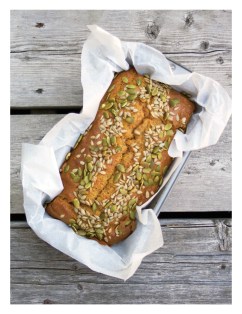
She is generously sharing three of her favourite Sukkot recipes here: Maple Glazed Turkey Breast and Pumpkin Loaf can be found in her award-winning cookbook Kosher Taste: Plan Prepare Plate. The Pomegranate Salad recipe is on her Web site, amystopnicki.com.
MAPLE GLAZED TURKEY BREAST Amy Stopnicki
Maple glazed Turkey Breast Photo Michelle Manzoni
½ cup (125 ml) maple syrup ½ cup (125 ml) plum sauce ¼ cup (60 ml) canola oil 1 red onion, thinly sliced salt and pepper to taste 1-2 lbs (500–1000 g) turkey breast, bone-in, skin-on
Preheat the oven to 325°F (165°C).
In a mixing bowl, combine the maple syrup, plum sauce, oil, onion, salt and pepper. Pour the mixture over the turkey breast and let it marinate at room temperature for 30–40 minutes.
Transfer the turkey to a baking pan and cover. Bake in the preheated oven for 2½ hours. Remove the cover and continue cooking for another 30–40 minutes, basting every 10 minutes or until the top of the turkey is golden brown. Let cool before slicing. Makes 6 servings.
MULTIGRAIN POMEGRANATE SALAD Amy Stopnicki
2/3 cup (200 ml) cooked quinoa 2/3 cup (200 ml) cooked brown rice 2/3 cup (200 ml) cooked lentils 1/3 cup (100 ml) pomegranate seeds 1 cup (250 ml) roasted sweet potatoes, cut into ½ inch (1½ cm) cubes 4 cloves garlic, chopped 2 tbsp (30 ml) olive oil
Salt and pepper to taste
In a large bowl combine the quinoa, brown rice, lentils, pomegranate seeds and garlic. Add the olive oil and season with salt and pepper. Makes 4–6 servings.
It has been just a few weeks since most students have returned to the classroom under the looming threat of COVID. Teachers and kids alike are navigating new rules, from cohort education, social distancing, hand sanitizing, and the use of masks.
Dr. Rachel Pearl
Dr. Rachel Pearl works as a pediatric nephrologist at Toronto’s Hospital for Sick Children, and as a general pediatrician and nephrologist in the William Osler Health System at Brampton Civic Hospital. Dr. Pearl spoke with the CJR about kids physically attending school and how best to keep them safe.
Is it safe for a child to be in school?
It’s perfectly safe. A lot of kids during the last six months in quarantine have become very depressed, anxious and restless. There are also some kids who are not going to learn well online because they’re not motivated, or they have a learning disability or an attention problem.
Yet, for some families, learning online is a really good option. But if I had to choose, I would send my child to school.
The burden of disease in children from COVID has been extremely low in terms of what we see at SickKids.
Should kids get a flu vaccine?
I strongly recommend it. Even though we know that it might be safe and effective [only] for 60 or 70 percent of children, we still recommend it.
Are children less likely to be sick with COVID?
So far, since school has started, I have not seen one admitted school age patient with COVID.
How do we minimize or prevent its transmission in schools?
Students need to wash their hands before they eat and after, and periodically throughout the day. We have to teach this to them and I think that is something the school can make part of its day.
Anyone who can wear a mask should be asked to wear one, whether the school is mandating it or not. For the younger children, if they can tolerate a mask, let them wear a mask.
We should be limiting our bubble when the kids are outside of school to protect elderly parents and grandparents. Those are the ones who need to be protected.
Is there a way to ensure children wear their mask properly?
If the mask looks like it’s comfortable for the child and it seems to cover their mouth and nose, then it’s being worn properly. We have to teach them that when they take the mask off, to touch it by the loops as opposed to in the middle.
How do we encourage smart behaviour?
We recommend layers of protection: hand washing, mask wearing, flu vaccination, and common sense. I think Canadians in general are very compliant and are appropriately concerned, far more than our neighbours to the south. And that’s why we have done a better job at containing this.
Are classrooms of more than 20 students too large to protect children?
Not if they have the space to spread the kids out. We are always looking at the risks of kids not being in school versus the kids being in school. If we had an ideal world, we would have smaller class sizes, bigger schools and better ventilation. If I were the parent of a kid in a class of 25, I would send them to school. I think the risk to them is extremely low.
How can parents protect children if they must take a school bus?
The children are hopefully staying seated and belted and spread out as much as possible. And they should be sitting with kids in their cohort. Students should wear a mask and open their window.
This is a confusing time for many students. How do we validate kids’ feelings?
They need to know that there is a bad virus out there right now. Kids understand about people getting sick. What they should know is that this is only temporary, and we have to manage this now. But it’s not forever.
Students should be encouraged to express their feelings. If they are anxious or worried, that should be acknowledged, not dismissed. Some kids have become overly worried, especially kids who have the tendency to be anxious or have anxious thoughts. It’s really hard for those kids to switch their thinking, and they have to find ways of distracting their thinking when they feel overwhelmed and sad. I recommend parents make a playlist of songs on their iPad or a watch a video that makes them laugh or smile.
Some children have underlying health problems. Should they stay home?
SickKids has really good guidelines online about going back to school. It is pretty rare there is a kid who really should not go to school. It’s usually someone who is very immune- suppressed or has had a recent transplant or is undergoing therapy for cancer.
Children with asthma should be going to school. We haven’t seen evidence that children with asthma are worse off if they get COVID. We didn’t see it with the first wave and we still haven’t seen it. There is usually an asthma surge in the middle of September because kids go back to school and share viruses. We haven’t seen the surge yet, maybe because everyone is wearing a mask or maybe because half the people are not back. I don’t know what this winter will bring.
What should a parent do if their child becomes ill at school?
A lot of schools will have public health nurses assigned to them and they will be able to provide advice. No parent will be forced to get their kid tested for COVID, but if your child is sick and you don’t test them, you will be required to stay home for two weeks and self-quarantine.
Has the impact of COVID damaged kids’ mental health?
Families have struggled. People have lost their jobs or the way they work has changed. Some parents’ field of work has become obsolete. There is a big trickle-down effect to the kids who are dealing with parents who are very stressed out and not always in a good place.
I think it does affect the children. I don’t think there is any way to protect them from that. I am seeing more anxiety and more psychosomatic symptoms, like kids with headaches and abdominal pain that come out when people are not feeling good in their mental health. It overflows into their body, for sure.
The lack of physical activity has also contributed to their mental wellbeing. Some kids have been inside because parents are scared, and they haven’t been allowed to do sports or play outside or even ride a bike. Exercise is so vital for kids’ mental health.
By being back at school, we are giving kids structure and hope that things will go back to normal. This is the way forward.
Shabbat Shalom and welcome to “Kitchen Talk,” the weekly food blog of the CJR. The pandemic has certainly changed the way we observe the High Holy Days. While many synagogues were nearly empty, several congregations attempted to bring the service to the people by blowing shofars in parks and parking lots across the GTA.
I ended up hosting an impromptu Rosh Hashanah dinner, al fresco, because at the last minute, my sister and I decided our numbers were too high for the whole family to celebrate safely together.
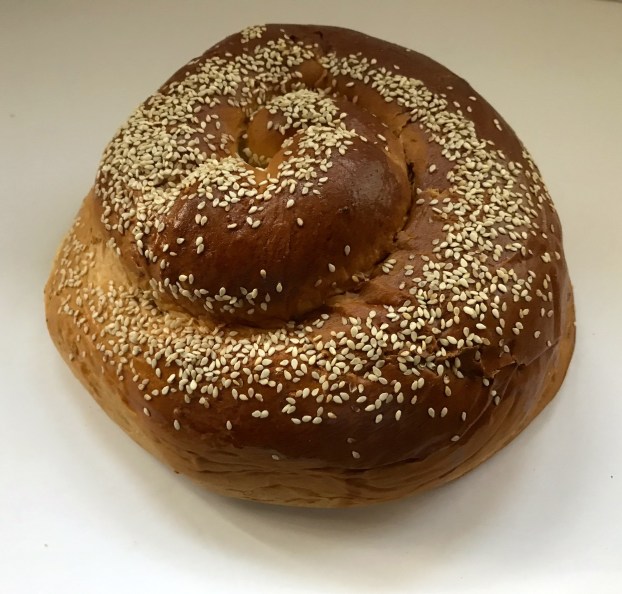
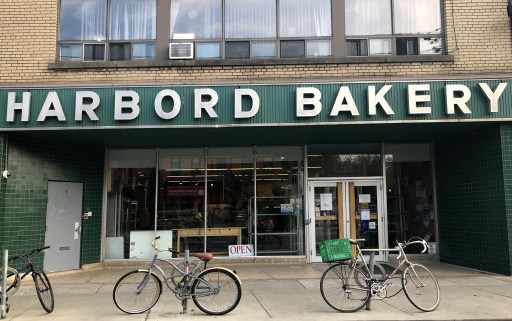
She gave me her extra brisket and I brought her challahs from the iconic Harbord Bakery, which has been supplying challahs, rye bread and other traditional fare since 1928.
Harbord Bakery is the focus of this week’s Community Spotlight, an occasional “Kitchen Talk” feature on how Canadian Jewish food entrepreneurs and chefs are faring during COVID.
My sister will not be hosting her annual big, break fast gathering this year, so I’ll be preparing a dairy meal for my immediate family. I’m planning to make Stuck-Pot Rice with Lentils and Yogurt, a delicious vegan recipe from Smitten Kitchen: https://smittenkitchen.com/2014/02/stuck-pot-rice-with-lentils-and-yogurt/
I’ll also serve my sister’s signature break-fast dish – blintz soufflé. The recipe I use is from the 1993 edition of Kinnereth Cookbook published by Toronto Hadassah-WIZO.
I found a recipe for Apple Charlotte, in Second Helpings, Please!, the storied community cookbook edited by the late Norene Gilletz and published by B’nai Brith Canada.
Apple Charlotte is comprised of a buttered baked bread shell filled with spiced sautéed apples. The recipe was probably devised in an era when every scrap of food, including stale bread, was utilized. The Second Helpings recipe calls for sliced white bread, but I made mine with leftover challah. I also increased the amount of sugar and added cinnamon and lemon juice.
Yom Kippur observance may be different from years past, but adaptability has always been the strength of the Jewish people. G’mar Tov and may you have an easy fast.
STUCK-POT RICE WITH LENTILS AND YOGURT
Stuck-Pot Rice with Lentils. Photo Barbara Silverstein
Salt 1 cup (250 ml) lentils washed and picked over 1½ cups (375 ml) basmati rice, rinsed well ¼ cup (60 ml) olive oil, divided 1 large onion, thinly sliced ¼ cup (60 ml) yogurt or kefir 2 tbsp (30 ml) lemon juice, plus additional wedges for serving 1/3 (90 ml) cup water 2 tsp (10 ml) cumin 1 bay leaf Freshly ground black pepper or pepper flakes Chopped flat leaf parsley, cilantro or mint for garnish
Using one pot for the full process, boil the lentils in salted water for five minutes. Then add the rice and boil the mixture for another five minutes without stirring. Drain the mixture and place it in a large bowl.
Reheat the same pot with 2 tbsp (30 ml) oil. Once it is hot, add the onions and salt, stirring until they are caramelized, about 10 to 12 minutes.
Add the onions to the bowl with rice and lentils. Stir in the kefir or yogurt, lemon juice, water, cumin, pepper, bay leaf, plus additional salt to taste.
Heat the pot over medium heat. Once fully hot, add the remaining 2 tbsp (30 ml) oil and pour in the rice-lentil mixture. Wrap a clean kitchen towel over the inside of the pot lid, so it is closed firmly. (Gather the corners of the cloth, so it doesn’t reach the fire!) Place the lid on the pot, sealing it tightly.
Reduce the heat to very low. Cook the rice mixture undisturbed for 30 minutes. Check it maybe once, to ensure the rice is not burning.
Remove the pot from the heat, and let it rest for 5 minutes, before eating. Makes 4 – 6 servings
BLINTZ SOUFFLE
18 assorted frozen blintzes – cherry, blueberry, cheese 5 tbsp (75 ml) butter 6 eggs 2¼ cups (550 ml) sour cream 1½ tsp (7 ml) vanilla 1½ tbsp (25 ml) orange juice 1/3 cup (90 ml) granulated sugar ½ tsp (2 ml) salt ½ tsp (2 ml) cinnamon
Preheat the oven to 350°F (180 °C)
Melt the butter in a 9 x 13-inch ( 3.5 L) baking dish. Lay the frozen blintzes in the pan.
In a large bowl combine the eggs, sour cream, vanilla, juice, sugar, and salt using a stand mixer, hand beater or immersion blender. Pour the egg and cream mixture over the blintzes. Sprinkle with cinnamon.
Bake 1 hour in the preheated oven. Serve hot. Makes 9 – 10 servings
APPLE CHARLOTTE
6 slices of white bread or challah ½ lb (225 g) butter, divided 6 tart apples, peeled, pared & quartered 1 tbsp (15 ml) vanilla ½ cup (125 ml) sugar ½ tsp (3 ml) cinnamon 1 tbsp (15 ml) lemon
Whipped Cream Garnish (Optional)
1 cups (250 ml) heavy cream 1 tbsp (15 ml) sugar 1 tsp (5 ml) vanilla Fry the bread in ¼ lb (110 g) butter until it becomes toasted. Set aside
In a large saucepan on medium heat cook the apples in the remaining butter until tender. Add the vanilla, sugar, cinnamon and lemon. Cover the pot,
Line a 1½ quart (1½ litre) casserole dish with the toast on the bottom and sides. Fill the casserole with the apples and cover the apples with the remaining toast. Bake at 325°F (165°C) for ½ an hour.
Whipped Cream: In a large bowl, whip the cream until stiff peaks are just about to form. Beat in the vanilla and sugar until peaks form. Make sure not to over-beat, otherwise cream may become lumpy and butter-like.
To serve: Place a large serving plate on top of the baking dish and invert the charlotte onto the plate so that the bottom of the charlotte is now the top. Cut into slices and serve warm or at room temperature. Optional: add a generous dollop of whipped cream. Makes 8 –12 servings.
COMMUNITY SPOTLIGHT
An occasional “Kitchen Talk” series on how Jewish-owned restaurants and food operations in Canada are faring during the pandemic
The Kosower family has run Harbord Bakery (115 Harbord St.) for 75 years. On the morning of Erev Rosh Hashanah I was in line for the yearly ritual of buying crown challahs. The line stretched around the corner as it does on every new year, when people, mainly in and around the downtown core, wait patiently to purchase the bakery’s famed crown or round sweet holiday challahs.
I have often run into people I know, but with everyone in line wearing masks this year, I didn’t recognize anybody. I did, however, schmooze with some people in line with me. I met Karen Goos, a transplanted New Yorker, and Mel Korn, a landsman from Montreal. Of course, we played Jewish geography.
It took about 45 minutes before I left the bakery with nine very heavy sweet challahs – six plain and three raisin – in tow.
Susan Wisniewski, co-owner of the bakery, invited me for tour of the place on a quiet midday afternoon following Rosh Hashanah. For the holidays, the bakery produces more than 2,000 crown challahs.
Albert Kosower, her father, had apprenticed at a bakery in Poland before immigrating to Canada around 1915, Wisniewski recounted. He worked for several Toronto bakeries before landing a job at Harbord.
Kosower purchased the bakery from his boss in 1945 and in the mid ‘50s, expanded and renovated the premises. He and his wife, Goldie, ran the business and lived upstairs with their three children.
Wisniewski said her father always hired unionized bakers. “He wanted his workers to have rights. He had also been a member of a union.” Today all 10 Harbord bakers are unionized, she added.
Wisniewski and her siblings, Roz Katz and the late Rafi Kosower, joined the family business, and now her son, Ben, is the third generation to run the bakery.
In addition to a wide selection breads and buns, the bakery produces gourmet cakes, pies, pastries and cookies, and it offers quiches, salads, soups and other savoury options.
Traditional Jewish dishes like gefilte fish, kugel and tzimmes are prepared every Friday. This kosher-style fare usually very much in demand at holiday time.
However, with the persistence of COVID, there were fewer orders this year, Wisniewski said. People had smaller gatherings.
“I have a big staff to support,” she noted, “but when I look at the restaurants and how they’re suffering [due to COVID], I can’t complain.”
MONTREAL – Attendance at Kol Nidrei and Yom Kippur services will be much smaller than even the reduced level planned by synagogues after the Quebec government raised the COVID alert level for the city.
Hours before Rosh Hashanah ended on Sept. 20, Health Minister Christian Dubé announced that the island of Montreal would be designated “orange,” the second-highest precaution under the province’s colour-coded system.
For houses of worship, that means a maximum of 25 people indoors and outdoors, slashed from the previous socially-distanced 250.
The great majority of Montreal congregations are Orthodox, and do not have the option of using digital technology during the holidays.
Mainstream Orthodox synagogues had already kept the number of worshipers at any one time to below the limit by holding Rosh Hashanah services both indoors and outside, often multiple times and for shorter durations. Children were even barred at some synagogues.
Rabbi Reuben Poupko
Rabbi Reuben Poupko of Beth Israel Beth Aaron Congregation in Cote Saint-Luc told the CJR that Yom Kippur services there will be further dispersed to comply with the new cutoff of 25.
However, he finds it “deeply disturbing” that houses of worship are subject to the same restrictions as any public gathering when movie theatres can still admit up to 250 people and bars remain open with only slightly reduced hours.
“The synagogues have gone above and beyond the regulations to ensure a safe environment, which took many hours of planning. We have doubled and even tripled the prescribed measures, done everything possible, with the advice of medical experts,’’ said Poupko, co-chair of the Centre for Israel and Jewish Affairs-Quebec.
“I’m not saying this is an infringement on freedom of religion, but its exercise is protected, whereas going to a bar or a movie is not a right.”
At his shul, only 120 people were permitted in the 750-seat sanctuary and 150 in a tent outdoors that has a capacity of 800.
Similarly, at Congregation Shaar Hashomayim in Westmount, Montreal’s largest synagogue, only a tenth of the nearly 2,000-seat sanctuary was occupied.
And though it is not mandatory once people are seated, the synagogues require masks to be worn at all times – indoors and out.
Stricter measures were not a complete surprise. Since late August, the daily increase in confirmed COVID cases in the province has risen to levels not seen since May.
Houses of worship, which were closed in March, were allowed on June 22 to reopen with a maximum of 50 people, which was increased to 250 on Aug. 3.
Most, however, either held services outdoors or with very limited numbers indoors, up to Rosh Hashanah.
Montreal public health director Dr. Mylène Drouin said last week that she had met with Jewish community leaders to urge adherence to the protocols over the holidays.
On Sept.17, a day before erev Rosh Hashanah, Federation CJA sent out an “Update for the High Holidays” outlining “recommendations’’ to the community from public health authorities. These included limiting indoor events to 50, whether in synagogues or community or rented halls, and requesting that people over 70 not attend.
“Although implementing these recommendations requires an adjustment in our plans, we must acknowledge that the virus is still among us, and that we must do everything we can to protect the health and well-being of our neighbours, family and friends, as well as ourselves,” stated Federation president Gail Adelson-Marcovitz.
One synagogue did cancel its Rosh Hashanah and Yom Kippur services for the first time in its 56-year history. Congregation Beth Tikvah, a large Orthodox synagogue in Dollard-des-Ormeaux on the West Island, had planned to have indoor and outdoor services.
But Rabbi Mark Fishman decided even this was too risky. He posted on Beth Tikvah’s Facebook page: “The upswing is empirically significant and growing in the Jewish community necessitating the closure of a major Jewish school and creating an atmosphere of anxiety and fear amongst parents in all the other schools, including HFS (its affiliated Hebrew Foundation School).
“The upswing in cases in the Jewish community once again has become the focus of the media and is putting the reputation of our community at risk.”
Herzliah High School was closed on Sept. 17 for two weeks at the behest of the public health department. At least 15 students and one staff member tested positive for COVID, an outbreak attributed to community transmission, likely a bar mitzvah.
In making the decision, authorities also noted an uptick of less than five to 11 cases the previous week in Cote Saint-Luc, where many from the school live or have contacts.
The suburb, which is majority Jewish, is making municipal property such as parks and parking lots available to congregations or groups of individuals for outdoor holiday services.
Herzliah was the first school in Quebec to close, but a second in Quebec City has since been shuttered.
Ultra-Orthodox leaders are also imploring members to adhere strictly to government rules. The Jewish Community Council of Montreal (Vaad Ha’ir) has sent out advisories.
Rabbi Yisroel Bernath, director of the NDG Chabad Centre, is pointing to his own example to drive the message home. He contracted COVID and, although relatively young, was “out of commission for six weeks.”
MONTREAL—The COVID pandemic has forced the Montreal Holocaust Museum (MHM) to abandon plans for a new multimillion-dollar premises, but says the project is still going forward.
In her annual report, outgoing president Dorothy Zalcman Howard said the MHM had found “an ideal location” to build a much larger museum and “achieved unprecedented success in obtaining funding commitments…The dream was about to be transformed into reality when COVID struck, and our board faced the difficult decision of stepping back from the brink and reshaping the vision.”
Holocaust survivor Mila Messner is captured in a photographic triptych for the Montreal Holocaust Museum’s new virtual exhibit, Witnesses to History, Keepers of Memory. (Photo courtesy MHM/Stéphanie Cousineau)
But she stressed that a new museum remains a top priority. “I invite you to stay tuned for good news in the future,” Zalcman Howard stated.
In 2018, the MHM announced plans to relocate and expand, leaving the Federation CJA building that was its home since it was founded in 1979.
The Azrieli Foundation pledged to underwrite a third of the cost, up to $15 million.
Zalcman Howard did not specify where that ideal location was, but the museum had said it wanted to move downtown in order to reach a wider audience.
The only one of its kind in Canada, the museum was receiving an ever-increasing number of visitors and demand for its educational services, necessitating the ambitious expansion.
A study by an independent consulting firm supported the project’s feasibility.
The work of the MHM remains more important than ever, as “Holocaust diminishment has taken root and awareness is declining,” Zalcman Howard told the MHM’s annual general meeting, held virtually Sept. 14.
Completing her two-year term as president, she assured: “Our future is vibrant and secure.”
MHM communications director Sarah Fogg later told CJR, “We are actively looking for a new location and have explored three excellent possibilities since April. We are definitely confident we will find a great site.”
The pandemic forced the MHM to close from mid-March until its reopening, with restrictions, on July 6. Despite this curtailment, Zalcman Howard reported that the facility reached hundreds of thousands of people over the previous 12 months, including 20,000 visitors, 9,750 of those students. More than 8,700 attended some 55 events organized by the MHM and 19 Holocaust survivors told their stories to some 12,500 people before the shutdown.
The MHM now has 13,405 items in its collection, the majority donated by local survivors or their descendants, as well as 858 videotaped survivor testimonies.
Following the shutdown, the museum’s already multi-faceted online and digital presence was further enhanced and attracted even more users, Zalcman Howard related.
Executive director Daniel Amar said the website and virtual exhibits had 116,000 visitors, while videos on YouTube of survivors’ testimonies were viewed 198,000 times, a 25 percent increase over the previous year.
The MHM produces pedagogical materials and runs teacher training programs. Over 35,000 visits to the educational pages on its site were recorded, traffic that did not stop while the schools were closed.
Zalcman Howard hailed the fact that her successor, Richard Schnurbach, is the first grandchild of survivors to serve as president of the MHM.
Three new members named to the board of directors reflect the MHM’s aim of attracting a more diverse public. Yasmine Abdelfadel is a founding member of Mémoires & Dialogue, a group fostering rapprochement among Jews and Arabs of North African origin; Widia Larivière is an Indigenous rights activist; while Denis Marion, a former senior political aide to Bloc Québécois and Parti Québécois members, is mayor of Massueville, a town near Sorel-Tracy. He lived in Israel in the late 1980s, earning a master’s degree in political science at Hebrew University.
Jennifer Carter, chair of the museum committee and University of Quebec at Montreal museology professor, is vice-president.
The latest virtual exhibit produced by the MHM is “Witnesses to History, Keepers of Memory,” portraits by Marie-Blanche Fourcade and Eszter Andor of 30 Montreal survivors who were photographed at home with objects that hold precious memories.
The annual meeting began with a memorial to the 60 survivors who died in the past year, conducted by Cantor Hank Topas and Rabbi Mark Fishman of Congregation Beth Tikvah.
Shabbat Shalom and Chag Samayach. Welcome to “Kitchen Talk,” the weekly food blog of the CJR. Rosh Hashanah begins this evening and I would imagine that many readers have already prepared most of the special dishes they’ll be serving this weekend.
With COVID looming large throughout the country, preparing and serving holiday meals will entail safety logistics. I’ll still be celebrating the holiday with my siblings and their children, as we do every year, but we’ll be eating outdoors.
There will be no chicken soup this year but we’ll still be eating brisket, as is customary. In this issue, I’ll be sharing American celebrity chef Michael Solomonov’s recipe for Coffee Braised Brisket, which people may want to try on Sukkot.
Chef Solomonov, author of the award-winning cookbook Zahav: A World of Israeli Cooking, did a Rosh Hashanah food demo for Israel Bonds’ Chef’s Table last week.
I attended three virtual Jewish communal events with Solomonov this summer. Despite winning seven prestigious James Beard Foundation Awards, the culinary equivalent of the Academy Awards, Solomonov is very gracious and humble about his success.
Mangoes have been very plentiful this summer so I am including, cookbook author Daniella Silver’s recipe for FreshMango Salad. It’s a quick and simple recipe and a perfect side dish for a holiday supper or lunch. The recipe comes from Silver’s first book, The Silver Platter: Simple to Spectacular Wholesome Family Recipes, co-written with the late, great food maven, Norene Gilletz.
It’s not too early to think about Break Fast dishes for Yom Kippur. Award-winning food author Amy Stopnicki of Kosher-Taste fame has generously shared her recipe for Spinach Feta Quiche. Follow Stopnicki @amyskoshertaste on Instagram.
MY MOM’S COFFEE BRAISED BRISKET Michael Solomonov
2 tbsp (30 ml) finely ground coffee 1½ tbsp (20 ml) ground cardamom 1½ tbsp (20 ml) ground black cardamom 1 tbsp (15 ml) plus 1 tsp (5 ml) kosher salt 1 brisket (first cut, about 4 pounds (2 K) ¼ cup (60 ml) canola oil 2 large onions, sliced 4 carrots, peeled and sliced 10 garlic cloves, sliced 1/3 cup (90 ml) tomato paste 1½ cups (375 ml) dried apricots 2 cups (500 ml) brewed coffee 8 large eggs in their shells Grated fresh horseradish
Two days before serving: Mix the ground coffee, cardamom, black cardamom, and salt in a small bowl and rub into the brisket. Cover loosely with plastic wrap and refrigerate overnight.
One day before serving: Preheat the oven to 475°F (245°C). Set a rack inside a roasting pan. Put the brisket on the rack and roast until the exterior has browned, about 20 minutes. Lower the oven temperature to 300°F (150°C).
Warm the oil in a large skillet over medium heat and add the onions, carrots, and garlic. Cook, stirring occasionally, until the vegetables have softened but not browned, about 8 minutes. Add the tomato paste and cook until it reduces slightly, about 2 more minutes. Transfer the vegetables to the roasting pan with the rack removed. Add the brisket, dried apricots, brewed coffee, and eggs in their shells.
Add enough water to bring the liquid halfway up the side of the brisket. Cover the pan tightly with two layers of foil, return to the oven, and braise for 1 hour.
Remove the eggs, gently tap them all over to make a network of small cracks, and return them to the braise. Continue cooking until the brisket shreds easily with a fork, about 3 more hours.
Let the brisket cool in its braising liquid, then refrigerate overnight.
To serve: Preheat the oven to 350°F (189°C). Slice the cold brisket, return to the braising liquid, and bake until warmed through, about 30 minutes. Spoon the broth over the meat.
Serve with the peeled eggs and grated fresh horseradish. Makes 8 servings
FRESH MANGO SALAD Daniella Silver
5 ripe mangoes, peeled and cut into long narrow strips ½ cup (125 ml) thinly sliced red onion ½ cup (125 ml) chopped fresh parsley 2 tbsp (30 g) chopped fresh basil
Dressing
¼ cup (60 ml) extra virgin olive oil ¼ cup (60 ml) lemon juice (preferably fresh) 1 tbsp (15 ml) brown sugar or honey ½ tsp (3 ml) kosher salt, or to taste Freshly ground black pepper
In a large bowl, combine mangoes with the red onion, parsley, and basil.
Dressing: combine dressing ingredients in a glass jar; seal tightly and shake well.
Add the dressing to the sliced mangoes and onions and mix well. Cover and refrigerate until serving time. Makes 6–8 servings
SPINACH FETA QUICHE Amy Stopnicki
6 eggs ½ cup (125 ml) milk 1 cup (250 ml) grated mozzarella cheese 3 cups (750 ml) baby spinach, cleaned and checked, chopped 1/3 cup (90 ml) feta cheese 1/3 cup (90 ml) pine nuts salt and pepper to taste 1 ready-to-bake frozen deep dish pie shell
Preheat oven to 350°F (150°C).
In a large mixing bowl, combine the eggs, milk, cheese, spinach, feta cheese, pine nuts, salt and pepper. Pour the mixture into the frozen pie shell.
Bake for 35– 45 minutes or until set. Makes 6–8 servings
COMMUNITY SPOTLIGHT
An occasional series on how Jewish-owned restaurant and food operations in Canada are faring during the pandemic.
Community Spotlight is an occasional “Kitchen Talk” feature on how Canadian Jewish food entrepreneurs and chefs are faring during COVID. The pandemic has hit many restaurants and other food businesses very hard.
This week, we shine a light on Lev Levine, 30, owner of the popular restaurant, Lox + Schmear at 1030 St. Clair Ave. W. in Toronto, which is offering its in-house smoked fish despite COVID.
You could call the St. Clair West-Oakwood Ave. area in Toronto “Bagel Central,” as there are three bagel businesses located near each other: Lox + Schmear (1030 St. Clair Ave. W.); What a Bagel! (827 St. Clair Ave. W.) and the Primrose Bagel Company (317a Oakwood Ave.)
Lev Levine, 30, owner of Lox + Schmear, set up the first of the three bagel shops in this mid-town Toronto neighbourhood, now home to a large number of young Jewish families.
Lev Levine
It was three years in June that they opened their shop, Levine said in a recent telephone interview.
Asked about the close proximity of their competitors, Levine replied with a laugh, “As long as people are eating bagels lox and cream cheese, I’m happy. Of course, I’m happiest when they choose my product.”
Lox + Schmear specializes in small batch fish smoking, they said.
“All the fish is smoked in house. It’s the freshest smoked salmon you’ll ever have. It’s really our specialty. We do the whole process. It’s all hand-sliced. There are no additives or preservatives, no artificial flavouring or colourings.”
Before the pandemic, Lox + Schmear was a popular neighbourhood hub known for its loaded cream cheese and lox sandwiches, served on Montreal-style bagels. Levine also offered soups and salad, but the smoked salmon was “king,” they said.
While Levine is no longer preparing their famous bagel sandwiches, they’re selling all the ingredients so their customers can make their own.
Along with bagels and cream cheeses, there’s an impressive selection of hot smoked salmon and trout options, as well as Levine’s ever popular house-smoked lox and pastrami-cured smoked lox.
Levine takes orders during the week and the clientele pick up their food on Sunday mornings.
“It’s been going quite well,” they said. “It gave people a sense of comfort when the pandemic started that we were doing all the [food] prep in a safe and thoughtful way.”
Levine grew up eating bagels, lox and cream cheese and this was their preferred dish for breaking the Yom Kippur fast.
CULINARY CALENDAR:
Sept. 22, 2 p.m.: On Lox and Life: The Forward is sponsoring a conversation about all-things-appetizing with Len Berk, the last Jewish lox slicer at Zabar’s, and Melissa Clark, the New York Times food writer and cookbook author. This talk will be moderated by Jodi Rudoren, editor-in-chief of the Forward https://forward.com/culture/452758/september-22-on-lox-and-life/
Sept. 23, 11 a.m. Bernard Betel Cooking Club: Prepare healthy make-ahead breakfasts and snacks with Maria Lindgren https://us02web.zoom.us/meeting/register/tZYocuyupjgtHdH4SkYK9XS69aolga5nsjd_
Prime Minister Justin Trudeau commended the Jewish community for its strength and unity as he joined volunteers in preparing Rosh Hashanah bundles at the Ottawa Kosher Food Bank on Thursday morning (Sept. 17).
Prime Minister Trudeau, Minister McKenna and MP Anita Vandenbeld package honey and apples ahead of Rosh Hashanah at the Ottawa Kosher Food Bank. September 17, 2020.
“There is nothing if not adaptability and resilience from the Jewish community over the centuries and millennia,” Trudeau said to the mask-wearing group of community members who gathered at Ottawa’s Kehillat Beit Israel Congregation before heading to the food bank in the same building.
“As we approach Rosh Hashanah, the spirit of helping each other out and being there for one another is more important than ever before,” added Trudeau. “In the midst of a global pandemic, I can’t think of a better moment to talk about tikkun olam and the need to really reflect on what each of us can do to contribute to a better tomorrow.”
Trudeau was joined by Ottawa-area Liberal MPs including Minister of Infrastructure and Communities Catherine McKenna (Ottawa Centre) and Anita Vandenbeld (Ottawa West-Nepean) as they packaged apples and honey with a group of six volunteers.
The food bank, which serves around 100 families each month, has seen increased demand due to the impact of COVID, explained manager Dahlia Milech. That’s why volunteers are more important now than ever, she said.
(L-R) Prime Minister Trudeau, Rabbi Eytan Kenter, president Judah Silverman, KBI Executive Director Rena Garshowitz at the Kehillat Beit Israel. September 17, 2020.
The increased need matched with the new reality of COVID has meant the food bank had to provide an array of new services, such as home-delivery to those without a vehicle.
“We have about 30 to 40 deliveries every month and it’s all volunteers doing that,” Milech told Trudeau, Vandenbeld, and McKenna as they toured the facility.
It’s the people who were suffering before the pandemic who are hurting even more now, explained Vandenbeld.
“The way the community is coming together to meet the needs [of the food bank] and help those that are suffering more is incredibly important,” said Vandenbeld. “The Jewish community has always had a strong tradition of giving and charity… It’s an example to the rest of the community.”
As synagogues across the province await Premier Doug Ford’s announcement about the potential rollback of social gathering limits, which will affect High Holiday services, Trudeau had an uplifting message for the Jewish community.
“How things are going to happen this weekend is still up in the air,” he said. “But we will adapt and be together. What I see here, and what you have demonstrated throughout these past months, is extraordinarily important to Ottawa and to the rest of the country and the world.”
The underlying slogan of the Jewish Federation of Ottawa’s Emergency Campaign, Michael Polowin, Chair of the Jewish Federation of Ottawa, told Trudeau, was that “the choices we make individually in our community today, will define the community that we will have tomorrow.”
In response, Trudeau light-heartedly referred to next week’s much anticipated Speech from the Throne.
“Well it sounds like you guys have seen a draft of the Throne Speech!” Trudeau exclaimed. “We’ll be talking about a lot of those messages.”
Shaked Karabelnicoff reports on a range of subjects including religious affairs, politics, diaspora Jewry, and Israeli life and culture. Born in Jerusalem, and raised in Winnipeg, Manitoba, she studied Journalism at Carleton University in Ottawa.
MONTREAL — Six months into the COVID pandemic, Montreal Jewish organizations have come up with creative ways to observe the High Holidays outside the synagogue, while adhering to health regulations and making the best use of technology.
Chabad of Westmount got an early start with “To Life! An Epic Celebration of 5781” at a drive-in theatre held Sept. 14.
The sprawling Royalmount Drive-In Event Theatre opened this summer at the heavily-trafficked intersection of Décarie Boulevard and Highway 40, providing a venue for socially-distanced, open-air live entertainment.
The aim was “to life our spirits and celebrate the coming new year and the new hope it brings,” said Chabad director Rabbi Yossi Shanowitz.
Participants could stay in their car or sit beside it in chairs they brought, maintaining two-metre distancing for movements beyond that.
“To Life!” featured the eight-piece band Shtreiml and a performance by acrobats from Cirque du Soleil, which has been grounded since the start of the pandemic, and a pre-packaged dinner. There was also blowing of the shofar and song.
Jewish National Fund Montreal is also encouraging its supporters to prepare for the new year in a freilich way. It’s presenting a virtual wine tasting and live tour of the Golan Heights Winery in Israel on Sept. 16.
Participants can purchase packages of three, four or seven bottles of its Mount Hermon label vintages in advance to enjoy the tasting for real, and get a partial tax receipt.
Zoomed yoga and mindfulness are part of observance for Montreal Open Shul, a “post-denominational” pop-up project started by Rabbis Sherril Gilbert and Schachar Orenstein and Cantor Heather Batchelor that has been bringing inclusive, participatory Judaism to “unexpected places” like cafés, community centres and yoga studios since 2018.
Its High Holiday services and programs, all online, promise “more joy, less oy.”
The first-day Rosh Hashanah service is accompanied by live music with Fran Avni. On the second day, Orenstein, a certified instructor, leads a hatha yoga practice “through the lens of teshuvah” and a chanting service. Gilbert continues the theme of deep repentence during the Days of Awe through “centring practice.”
The sole in-person component is tashlich and shofar blowing at Beaver Lake on Mount Royal.
Following a Yom Kippur service, American musician, actor and Jewish studies instructor Anita Silvert present a “Bibliodrama” based on the Book of Jonah.
Two American rabbis, Jan Salzman and Mark Novak of the Jewish Renewal movement, join Gilbert and Orenstein for the concluding Yizkor and Neilah observances.
The Mile End Chavurah is also going almost entirely virtual. Founded 11 years ago, the grassroots, multi-generational community describes itself as “irreverently pious,” while seeking to re-imagine religious practice.
Rosh Hashanah and Yom Kippur services are conducted by ritual leaders, singers and musicians, and aim to be as participatory as is possible with everyone at home.
On the second day of Rosh Hashanah, four options are offered: a one-day out-of-town retreat for contemplation and study that may involve yoga and nature walks; an apple-picking outing; an outdoor gathering in the city; or the online “Songs of Social Action,” when participants can sing songs on themes ranging from anti-racism to LGBTQ issues to Israeli-Palestinian peace.
The Museum of Jewish Montreal reports that the virtual cooking workshop on Moroccan Rosh Hashanah cuisine held on Sept. 13, hosted by its partner Wandering Chew, went well.
Ron Arazi of New York Shuk, an artisanal food purveyor specializing in Sephardic and Middle Eastern Jewish cuisine, showed viewers how to make such traditional holiday dishes as tanzeya, a stew of dried fruits, nuts and carmelized onions, and pain petri, an anise-flavoured challah.
Even the annual POP Montreal International Music Festival, which opens Sept. 23 in a hybrid in-person and virtual edition showcasing indie and alternative acts, is getting into the spirit of the season.
It closes Sept. 27 with “Alphabet of Wrongdoing: A Jewish Liturgical Redux,” a live-streamed performance by Daniela Gesundheit from Los Angeles. She sings her composition inspired by the High Holidays liturgy, adapted “for secular audiences and secular spaces.”
Gesundheit, who divides her time between Los Angeles and Toronto, is a cantor and serves Toronto’s LGBTQ-inclusive Congregation Shir Libeynu as musical director. She is also founder and lead vocalist of the indie-pop band Snowblink.
“Alphabet of Wrongdoing,” which she created a few years ago, is derived from the Yom Kippur prayer Ashamnu during which one confesses sins of the past year – alphabetically.
Her composition draws on its “themes of reckoning, forgiveness, mortality, striving and atonement,” she says, which should resonate with everyone.