A senior government official in Ottawa is under investigation for social media posts accusing Israel of the “ethnic cleansing” of Palestinians, “leeching” off American taxpayers, and harbouring pedophiles.
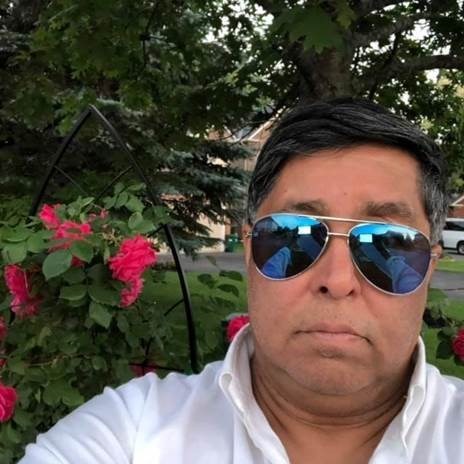
Nizam Siddiqui is described in a government employee directory as a senior analyst in the Privy Council Office, which supports the prime minister and cabinet in policy making for the country.
The posts were first uncovered by Israeli blogger David Lange. Acting on a tip from a reader, he said he matched the person in a Facebook profile to a YouTube video in which Siddiqui was interviewed following a terrorist event on Parliament Hill.
Lange said he deployed “due diligence” in concluding that the man on the Facebook page and in the YouTube video are the same person.
The postings can be seen on Lange’s site, israellycool.com, one of the largest English-language blogs in Israel.
After Lange brought the posts to light, the Centre for Israel and Jewish Affairs (CIJA) and Friends of Simon Wiesenthal Centre (FSWC) called for government action.
Paul Duchesne, the PCO’s director of media relations, told CIJA, FSWC and the CJR that the Privy Council Office “takes this matter very seriously and expects all of its employees to adhere to the Values and Ethics Code of the Public Service. We are shocked and disappointed with this content and we are following due diligence processes to determine the facts surrounding the involvement of this employee to enable us to respond quickly and appropriately.”
His statement did not address whether Siddiqui is still at work or what sanctions he may face if the allegations are found to be true.
The Jewish organizations said they were pleased with the PCO’s response.
“We were gratified to receive assurances from the PCO that they regard the allegations as seriously as we do, and that an investigation and immediate action will be pursued to address the issue,” they said in a joint statement. “In their response, the PCO officials re-affirmed that there is no place for such appalling attitudes amongst members of the public service.
They said they expect that the individual in question “will be dealt with in a manner that reflects the seriousness of his hateful actions and breach of public trust.”
The statement from the two Jewish groups said the Facebook page also includes “a multitude of libels against Israel, referring to it as a ‘parasitic, racist, apartheid state,’ and indicates ‘likes’ for over a hundred extremist anti-Israel groups around the world.”
In an interview, Lange said he uses his blog to uncover antisemitic actions wherever he can.
“A reader sent me an email saying, ‘check this guy out,’” he said. “I looked it, and [Siddiqui’s] Facebook page, and the Youtube video, where he says he works for the government.”
In that video (https://www.youtube.com/watch?v=ZpsJJuSM9XE), Siddiqui is interviewed by the Ottawa Citizen about being in the area of a terrorist attack on Parliament Hill. He expressed the hope the incident would not lead to an increase in Islamophobia.
“This has been bothering me for a long time,” he told the interviewer. “It was very hard to see a young man lose his life like that.”
Siddiqui was likely referring to the 2014 attack in which Nathan Cirillo, a Canadian soldier and reservist on sentry duty at the National War Memorial, was fatally shot by Michael Zehaf-Bibeau.
Siddiqui did not respond to a telephone call for comment.
The Facebook posts also allege that European Jews are a counterfeit people and that Palestinians are the true descendants of the Hebrews of the Bible.
Lange said the views expressed in the posts are especially troubling because they came from someone in a position of public trust.
“It’s always troubling to me when someone has these views,” he said. “I wouldn’t say it is particularly troubling to me that he is close to the prime minister, but it would be extremely troubling to me that now that they know about his views, they were to cover for him.”
On Oct. 26, Ontario’s cabinet surprised many when it decided to bypass committee hearings and adopt the International Holocaust Remembrance (IHRA) working definition of antisemitism, contained in Bill 168, the “Combating Antisemitism Act.” Ontario thus became Canada’s first province to adopt the definition.
Bill 168 passed second reading earlier this year and according to one source, more than 100 Ontarians had requested a chance to appear before the Standing Committee on Justice Policy to have their say – both for and against adopting the IHRA definition, or to suggest amendments.
Among the undelivered deputations was the following from Randi Skurka, appearing as an individual.
Good morning/afternoon,
Firstly, I’d like to thank the committee for the opportunity to participate in today’s hearing.
As the most widely accepted definition of antisemitism in the world today, endorsed by a growing number of countries, academic bodies, even making inroads in the Middle East, it is crucial that Ontario adopt the IHRA definition.
I am forever grateful to my grandparents, who bravely left Poland a century ago to make their home here in Toronto. Fleeing pogroms and deeply ingrained prejudices, they came in search of a better life where they could live as Jews in freedom and safety. My 92-year-old father remembers the antisemitism he experienced as a young person, even here. I grew up believing that those days were over. But I was wrong.
According to Statistics Canada, Jews are the most targeted group for police-reported hate crimes in the country. Jewish students on campuses across Canada have been singled out, ostracized or attacked for years simply for expressing their Jewish identity. For example, over the past year alone, they were denied kosher food at the University of Toronto, kicked off the student union at McGill University for planning a visit to Israel, and at York University, were threatened with violence for attending a talk featuring Israeli speakers. Antisemitism masquerading behind the veneer of anti-Zionism is a growing problem in Canada and internationally.
It all starts with words. When Israel Apartheid Week was launched at U of T in 2005, it used hateful rhetoric singling out Israel alone as a human rights abuser. Together with the BDS movement, which has been condemned by our own prime minister, Justin Trudeau, as blatantly antisemitic, these campaigns have proliferated around the world, creating a toxic atmosphere in which harassment and targeting of Jewish students have become mainstream.
These movements represent themselves as peaceful, nonviolent forms of protest. But the last two decades have proven otherwise. Conceived by known anti-Israel activists, whose clearly stated goals are the complete elimination of the State of Israel, the manifestation of these movements has been nothing less than the total isolation and social death of any student or faculty member that dares to defend Israel’s right to exist.
A recent survey has shown that the Canadian Jewish community, small but mighty, defines itself with things like Holocaust remembrance, tradition, and working for social justice. Though widely diverse religiously and politically, one feature among all others unites them – for a full 86 percent of Canadian Jews, their connection to Israel is an important and essential part of their identity.
The IHRA definition clearly states that criticism of Israel in the form of civil discourse is not considered antisemitic. Yet, all too often, this criticism is presented in a historical vacuum without any sense of context, intended to mislead its audience. This is exactly what the Soviet Union did starting in the late 1940’s – take those old canards and hateful caricatures, and harness them to persecute and demonize Jews now behind a façade of anti-Zionism. How soon we have forgotten the decades of oppression and incarceration of Soviet Jewish dissidents simply because of their identity.
These are the same dangerous myths that are rearing their ugly heads today.
Just this past July, two anti-Israel rallies, one in Toronto, one in Mississauga, graphically demonstrated how anti-Zionism is used as a cover for plain old antisemitism. They were organized by known hate groups with a strong presence on Ontario campuses. Far from peaceful, they quickly devolved into hatemongering and incitement to violence, with the chanting of slogans such as “intifada, intifada”, “from the river to the sea,” and most frightening of all, “The Jews are our dogs.” Is this any way to rally for human rights, here, in Ontario?
The Arab-Israeli conflict is longstanding and very complex. The only way to resolve the issues is for the two parties to sit down together at the negotiating table and have direct dialogue. Just recently, Canada applauded as Sudan followed UAE and Bahrain in establishing a peace agreement with Israel. The Middle East is rapidly changing and finally acknowledging Israel as a partner and a neighbour. This is the way of true progress and liberalism.
It’s time to leave the ancient myths and medieval tropes in the past, where they belong. To embrace each other and give each other space. To listen to one other. To rely on data and facts on the ground. To promote freedom. To build bridges, instead of threatening destruction. The IHRA definition of antisemitism will help to confront the escalating revival of an ancient hatred, and stop it once and for all, so that all of us may feel welcome and safe.
Thank you.
Randi Skurka
Randi Skurka is a writer and lay leader in the Jewish community, with a focus on education and antisemitism. She sits on the boards of Beth Sholom Synagogue and StandWithUs Canada, and holds a Master of Arts degree in Jewish Studies.
In a year characterized by increased antisemitism frequently linked to COVID conspiracy theories and social unrest caused by the lingering effects of systemic racism, it seemed only natural that Holocaust Education Week 2020 would tackle some of the the underlying conditions that contribute to such activities. In a quickly changing world, it is more relevant than ever that we understand the role Holocaust education can and does play in fostering an inclusive society that respects all Canadians.
Holocaust Education Week (HEW) runs Nov. 2-9 with programs continuing throughout the month. This year’s theme, Hindsight 2020, developed by UJA’s Neuberger Holocaust Education Centre, the organizer of the event, aims to do just that. By reflecting on the role that Holocaust education has played in our community, and promoting best practices in education that encourages deep learning, a solid foundation is laid for dealing present day challenges.
Now more than ever, nurturing Canadian civil society through the lessons of the Holocaust is a vital goal of HEW.
In response to the pandemic, the Neuberger has transformed Holocaust Education Week into a digital experience continuing throughout the year. By partnering with the Virtual J, programs will be presented live, free of charge and available for viewing on-demand long after the conclusion of each presentation.
Dara Solomon, the Neuberger’s executive director, commented on the new format: “Partnering with the Virtual J extends the reach of our programming to diverse audiences everywhere. Now, anyone with internet access can learn about the Holocaust wherever they live, at any time of day assured that the programming is built on the best and highest pedagogical standards,” she said.
HEW’s opening night unpacks the theme with American journalist Yair Rosenberg addressing the role Holocaust education and memory play in combatting the threats of contemporary antisemitism, prejudice, and fascism. He and Canadian journalist Sarah Fulford, editor-in-chief of Toronto Life magazine, will respond to some of today’s most pressing questions, including how and where does Holocaust education fit in to our current situation, and what have we learned from the Holocaust as a society that can better inform our future and point us towards a more just, equitable, and peaceful world?
A carefully curated film series that delves deeply into this year’s theme runs from November until next April. Each screening features special guest speakers, such as actor George Takei of Star Trek fame. As a child, Takei, along with other North Americans of Japanese heritage, was subject to forced relocation to internment camps during the Second World War. He has written a graphic memoir about his childhood experiences, titled They Called Us Enemy, which is an important entry point into learning about how our countries responded domestically while fighting fascism in Europe.
Takei’s personal insights provide yet another aspect of how the Second World War affected Canadians and Americans.
“For Canadians grappling with what our nation’s wartime conduct means, it helps provide a more complete picture and encourages dialogue on the significance of human rights in today’s civil society,” said Solomon.
Another not-to-be-missed program features philosopher and cultural commentator Susan Neiman, who will share her insights into grappling with the past and its significance with respect to contemporary memorial culture. A three-part Neuberger book talk series is devoted to her recent publication Learning from the Germans. Guest presenters are featured weekly and the series culminates with a discussion with Neiman.
HEW’s closing program will feature Holocaust survivor Pinchas Gutter’s personal reflections on the impact of Holocaust education and remembrance. Gutter, has spoken internationally about his Holocaust experiences, published his memoirs Memories in Focus with the Azrieli Foundation, and was one of the first to be interviewed for the USC Shoah Foundation’s Dimensions in Testimony program.
In conversation with the Neuberger’s Education Coordinator, Michelle Fishman, herself the granddaughter of Holocaust survivors, Gutter will expand on the role and power of education in combatting inequality, racism, fascism, and antisemitism.
A special tribute marking the 82nd anniversary of Kristallnacht, when a wave of violent anti-Jewish pogroms rampaged across Nazi Germany on Nov. 9 and 10, 1938, is also part of this program.
Visit the Neuberger’s website www.holocausteducationweek.com for a complete listing of all programs.
Carson Phillips, PhD, is Managing Director of the Neuberger Holocaust Education Centre of UJA Federation of Greater Toronto
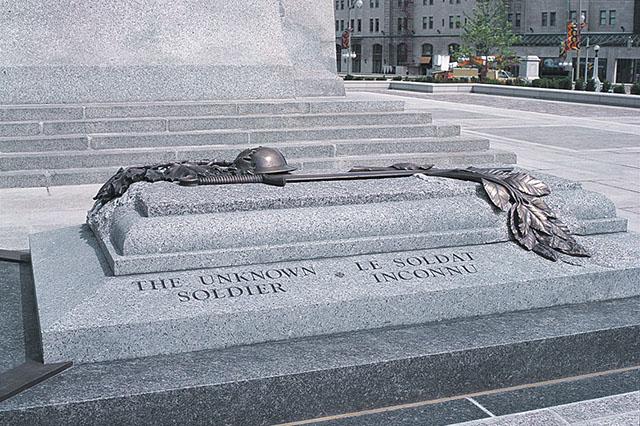
Prime Minister Justin Trudeau and Defence Minister Harjit Sajjan have condemned the recent antisemitic desecration of the Tomb of the Unknown Soldier in Ottawa.
Tomb of the Unknown Soldier
Ottawa police are searching for a man they say carved hateful graffiti at the National War Memorial. Police say the man used a sharp object to etch graffiti onto the Tomb of the Unknown Soldier at the memorial at Wellington and Elgin streets.
It happened around 9:45 p.m. on Wednesday, Oct. 14, police said.
“The antisemitic desecration of the Tomb of the Unknown Soldier is completely unacceptable, and I strongly condemn this hateful act, Trudeau stated in a tweet. “I urge anyone with information regarding the perpetrator’s identity to contact Ottawa Police.”
The vandalism was “despicable,” tweeted Sajjan. “The Tomb of the Unknown Soldier represents the gallantry and the sacrifices of those who fought for our freedom. On Remembrance Day, we’ll come together to recognize our veterans.”
Police described the man as white and wearing a light-coloured sweater, dark pants, a dark toque and carrying a black back pack. He was riding a mountain-style bike, police said.
The graffiti were removed within 24 hours, said Ottawa police spokesperson Const. Amy Gagnon. “We don’t know yet what motivated this person,” she added.
Veterans Affairs Minister Lawrence MacAulay called it a “disgusting act.”
“This was not the vandalization of public property – it was the desecration of a site that stands as a permanent reminder of the memories and sacrifices of every single person who has fought and died in services of Canada,” he said in a statement.
Ottawa Mayor Jim Watson called it an “insult and disgrace to our war dead and veterans. If anyone recognizes this lowlife, please contact police,” Watson said in a tweet.”
In a statement, Royal Canadian Legion dominion president Thomas Irvine said it’s “unthinkable that anyone would deface this sacred place…we strongly condemn this criminal act.”
Anyone with information is asked to contact a Hate Crime Investigations Unit detective at 613-236-1222 extension 5453 or to leave an anonymous tip through Crime Stoppers.
The following is an editorial that ran in the National Post on Oct. 17, reprinted here with permission:
Properly used, social media can be a powerful educational tool
We live in an era of fake news and forgotten history. Social media is a breeding ground, or at least an amplifier, of the former. Tackling that challenge will be the work of years. But, properly used, social media can also be a powerful educational tool. And the first step in making it so will be at least adopting a do-no-harm policy. There was an overdue but welcome step in that direction this week.
Twitter and Facebook, the social media giants, both said that they will ban Holocaust denial on their platforms. This is long overdue. (Some important background on this can be found elsewhere in these pages, reprinted with permission from the Canadian Jewish Record.) Holocaust denial is not a matter of opinion or free speech, it is an overt form of anti-semitism, and it is right to treat it as such. It is perplexing, and alarming, to be blunt, that the social media giants needed this long to take action to deny the organized Nazi slaughter of six million Jews and millions of other “untermenschen” — racial and social undesirables. But having finally done the right thing, albeit belatedly, the companies deserve at least muted credit. They dawdled, but they did the right thing in the end.
The challenge, and opportunity, is now to find a way to leverage the power of these sites to teach the history, warts and all, that is the birthright of mankind. Historical illiteracy is a real and growing problem. It is not limited to the Holocaust, of course, but the problem there is particularly acute, and illustrative: a recent survey found astonishing levels of ignorance regarding the basic historical truth of the Holocaust among young American adults; comparable Canadian surveys reveal numbers that aren’t quite so appalling, but are certainly nothing to be proud of, either.
Education, of course, is essential, and the history education that Canadian students receive has long been known to be woefully inadequate. That can and must be fixed. But that shouldn’t just mean textbooks in classrooms (physical or virtual). The social media tools of today could do tremendous good if properly harnessed by institutions, scholars and living witnesses. Now that the giants have agreed to stop harming the cause, perhaps now they can be put to a nobler use.
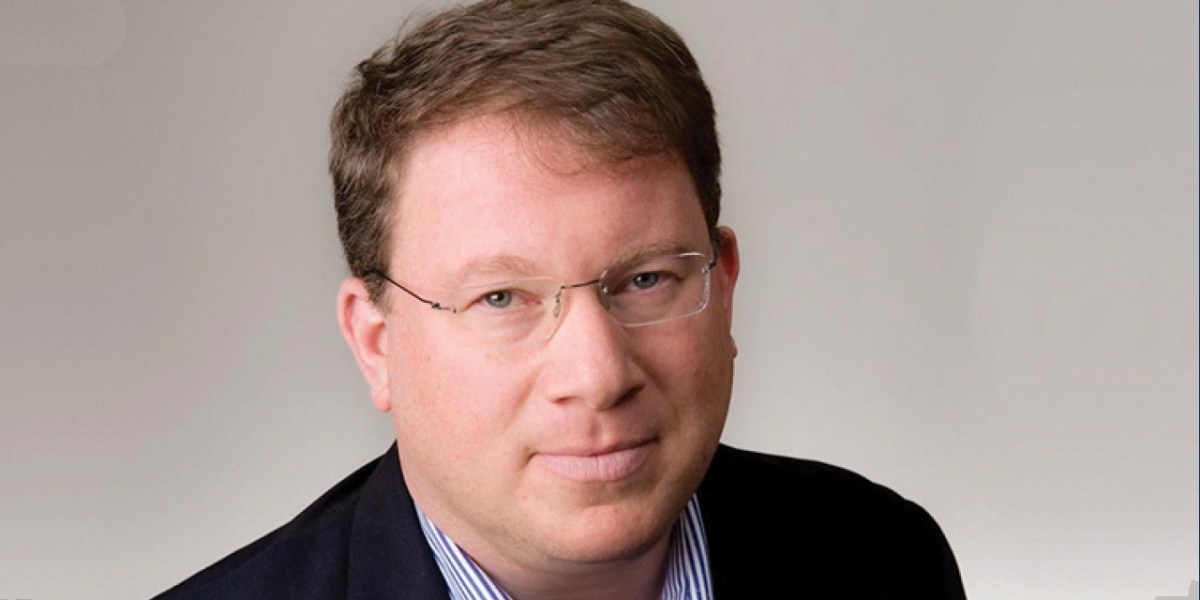
MONTREAL – The weakening of American democracy and status of the United States globally is “bad for the Jews,” whose flourishing has been tied to the country’s founding ideals, says Jeffrey Goldberg, editor-in-chief of The Atlantic magazine.
Jeffrey Goldberg
The influential journalist offered a bleak assessment of the state of America in a virtual lecture hosted by Congregation Shaar Hashomayim on Oct. 13, and he placed the blame squarely on President Donald Trump.
Trump’s mishandling of the COVID crisis has not only been disastrous for Americans, but accelerated the United States’ waning prestige in the eyes of its allies and those who hold it as a model, Goldberg said.
“The last four years have been a slow-rolling catastrophe that has profound consequences for the world…I think it is too early to say that America is in a kind of decline, but it is on a downward slope and headed to a bad place if we are not careful,” he said.
Undemocratic China, Russia and Iran are moving in to fill the vacuum left by the U.S.’s retreat from dominance, he said, and these countries are not “models of good behaviour.”
The trend is “not irreversible,” though Goldberg stopped short of predicting the outcome of the Nov. 3 election.
If Democratic candidate Joe Biden wins, Goldberg’s advice to him is to first get control of the coronavirus. “We will have no respect in the world unless we do that.”
Then, Biden should set about repairing the country’s reputation by going to its friends and essentially apologizing for what had been a “weird” episode in American history, he thinks.
The U.S. can and should resume its “exceptional role” in the world, Goldberg believes.
“Trump could have coasted to re-election if he had taken the virus seriously and gotten it under control,” he said. Instead, Goldberg regrets that his country has been “a sad joke over the past four years.”
The U.S. is accustomed to sometimes being hated or feared, but not to being “pitied” as it is today, especially in Europe, said Goldberg, who finds it shocking that a country so advanced could account for one-fifth of the world’s COVID deaths but only 4.25 percent of the population.
The situation is particularly worrisome for Goldberg because the “American dream is very much intertwined with the Jewish dream,” and the loss of the former puts the future of the latter in doubt.
“Historically, extremism and polarization have been bad for the Jews,’’ he said. The bitter fracturing between the political right and left, and the pitting of racial groups against each other do not bode well for the community, Goldberg said.
Trump, whom he called a racist and xenophobe, became president because he appealed to white reactionaries frightened by the change in the country’s racial makeup.
American Jewry represents almost half of the world’s Jewish population, he pointed out. A diminished U.S. is also not good for Israel, for which the United States has been a “blessing,’’ he added.
Even Jews in Canada are affected, he suggested.
“The Canadian Jewish community is unusually unified and organized, but it is still small. It benefits from having happy, secure brethren to the south.”
Goldberg was praised for being “fiercely courageous” by Lewis Dobrin, co-chair of the Shaar’s Tuesday Night Learning series, of which this talk was a part. He referred to Goldberg’s “bombshell” article in The Atlantic in September reporting that Trump had called American war dead “losers” and “suckers” during a 2018 visit to a French military cemetery – a report the president vehemently denied.
An antisemitic Polish priest with an international following has been formally banned from the Roman Catholic Archdiocese of Edmonton after lobbying from B’nai Brith and Alberta’s former deputy premier, Thomas Lukaszuk.
Father Tadeusz Rydzyk runs the far-right radio station Radio Maryja, which has a television affiliate, Trwam, as well as a national newspaper and Catholic college. He has the dubious distinction of being denounced by two popes, John Paul II and Benedict XVI, for antisemitism.
Father Tadeusz-Rydzyk
In on-air comments in 2016, Rydzyk lambasted “synagogue-type behaviour” among some of his followers, and in private conversations, leaked to a Polish magazine said that then-Polish president Lech Kazcynski was taking orders from Jews. His radio station has also promoted Holocaust denial, with a guest in 2000 claiming that gas chambers at Auschwitz didn’t exist.
The station has also featured diatribes against “gender ideology” and the “Islamification of Europe.”
“Most anti-Semites are racist in many different ways,” said Abe Silverman, B’nai Brith Alberta Manager of Public Affairs, referring to Rydzyk as an “equal opportunity” bigot.
And Rydzyk isn’t a fringe figure. Poland’s ruling ultranationalist Law and Justice party has reportedly offered subsidies of about $7.5 million to affiliates of Rydzyk and Radio Maryja. The Polish post office printed a stamp in honour of Radio Maryja’s 25th anniversary in 2016, the Anti-Defamation League reported.
“He has a massive following,” said Lukaszuk, who served as deputy premier under former Alberta premier Allison Redford and is a dual Canadian-Polish citizen. “His following isn’t so much religious as it is political.”
Lukaszuk said there’s major overlap between Rydzyk’s followers and supporters of the government.
“He controls a lot of votes. That’s all there is to it. The current governing party before the election campaign literally goes to him for a blessing and he endorses him through his media, and that carries a lot of sway.”
Lukaszuk brought Rydzyk to Silverman’s attention when the priest celebrated Mass at Calgary’s Our Lady Queen of Peace Parish in 2018, which was approved by the diocese.
In response, Silverman met with Archbishop Richard Smith to express his concerns.
“The effect of this was that virtually all churches and diocese in Alberta will no longer invite Father Rydzyk to preach,” Silverman said. “I was very well-received and treated with the highest level of respect.”
Since Rydzyk’s programs and speeches are in Polish, Lukaszuk says the archdiocese likely wasn’t aware of the full extent of his bigotry.
At the time of Rydzyk’s visit, Bishop William McGratton of the Archdiocese of Calgary said the priest had changed his ways, pointing to a museum Rydzyk founded in Poland dedicated to the stories of Poles who rescued Jews during the Holocaust, and to a 2016 meeting he had with an Israeli ambassador.
But Lukaszuk said the museum offers a sanitized view of Polish history, downplaying the role many Poles played in carrying out Nazi atrocities. And according to Silverman, the Israeli ambassador reprimanded Rydzyk when they met.
When Rydzyk tours the world, he doesn’t just celebrate Mass but also sells tickets to lectures to raise funds for his various projects.
“If we can somehow cut off his funding by having churches agree not to invite him and give him money, then that’s a win for us,” said Silverman. “If we can successfully start cutting off his funding, and this has to be done on an international level, including the funding he receives from the Polish government, we can maybe put a stop to this guy.”
In a statement, the Archdiocese of Edmonton said it had no plans to bring Rydzyk back to Alberta.
“If a request was made, it would be denied given Father Rydzyk’s history of making controversial comments that at times have caused distress and division,” the statement read.
Silverman said the ultimate goal is to prevent Rydzyk from visiting Canada again.
“We will go to other jurisdictions that have Catholic leadership and we will have the same conversations with them, and little by little we hope to have Father Rydzyk banned from Canada period. There may be a time when we go to the federal government and make a case, and hopefully they won’t issue him a visa.”
Said Lukaszuk, “if this guy is offensive in Calgary, he’s offensive in Toronto too.”
– This article first appeared in the Alberta Jewish News, where Jeremy Appel is a Local Journalism Initiative Reporter.
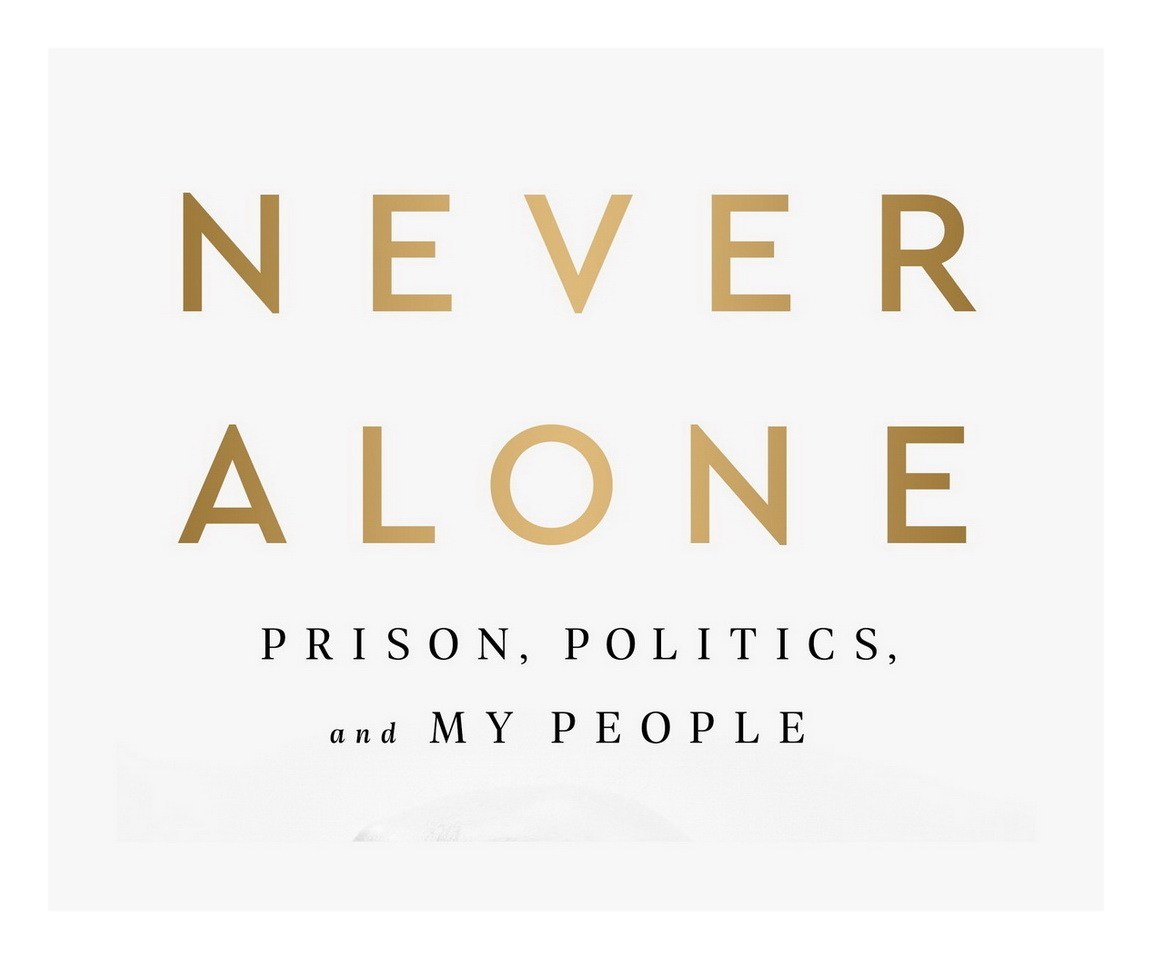
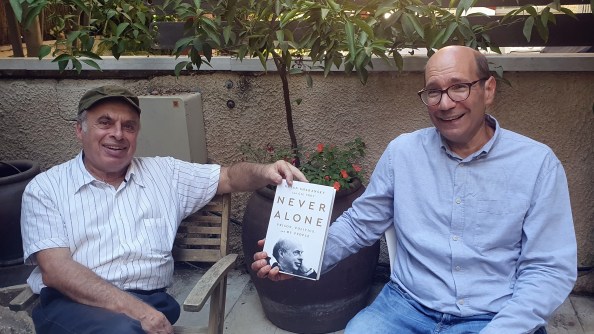
The newly published Never Alone: Prison, Politics, and My People by Natan Sharansky and Gil Troy (PublicAffairs, 480 pages) offers an intimate portrait of the man who spent nine years as a political prisoner in the Soviet Union for his activism on behalf of Jewish emigration and who, after his release in 1986, became an outspoken politician in Israel. More recently, he was head of the Jewish Agency for Israel.
Troy, who made aliyah 10 years ago, continues to serve as a Distinguished Scholar in North American history at McGill University, where he’s taught from 1990. A specialist in the U.S. presidency, the New York-born Troy is a prolific author on the subject, as well as on Zionism. His most recent previous book was The Zionist Ideas: Visions for the Jewish Homeland.
The CJR interviewed Troy about Never Alone and his impressions of Sharansky.
How long have you personally known Natan Sharansky? How long did you work on the book together, and how much are his words/ideas vs. yours?
I had the privilege of first meeting him in the early 2000s when he was Diaspora Affairs Minister, among other positions. He was very concerned about antisemitism and anti-Zionism on campus, and I shared that concern as a McGill professor. It was mostly, however, a “hello, how are you?” type relationship, with occasional brainstorming meetings in his Jewish Agency office.
When I finished my last book, The Zionist Ideas, I asked him to write the preface, thinking of him as the most prominent and legendary Zionist in the world today. He kindly agreed – then turned it around and asked me to be his co-author.
Natan Sharansky and Gil Troy
We were true co-authors. We worked extremely closely together for three years, arguing lovingly about every word, every phrase, every logical sequence. And yet, in all that time, despite coming from such different worlds, we never had an ideological disagreement. So the book truly is our words, our voice – we call this a “memoir-festo,” a manifesto and memoir, because we are using his life story to tell a broader story about Jewish peoplehood and freedom.
Why the title Never Alone?
I was brainstorming with a good friend, David Suissa, [a former Montrealer now living in Los Angeles]. I told him that the KGB kept telling Natan, “you’re forgotten, you’re abandoned, you’re alone,” but Natan says, “I knew I was never alone.”
“That’s it!” David shouts. “For 75 years we’ve emphasized ‘Never Again’ – and of course we will always revere our Holocaust martyrs – but our message now is that if you are a part of this amazing people called the Jewish people, you can know you are never alone.”
What surprised you the most in getting to know Sharansky so personally? Were there any revelations?
The newsiest part for me – and the most surprising – is that this guy is the real deal. This is a story of a man [and his wife Avital] who should have been crushed by the Soviet Union. Instead, they stood up, resisted, became symbols of freedom, and are now doing everything they can to continue the struggle, while living the simple, humble life they fought so hard to enjoy.
What does Sharansky have to say concerning Canada, about Irwin Cotler, who acted as his legal counsel while he was in prison, and the Soviet Jewry movement here? Of more recent note, the book discloses that Prime Minister Benjamin Netanyahu wanted to dissuade emigration of French Jews to Canada to ensure their aliyah. True?
There is some fascinating Canadian content: heroes like Irwin Cotler, one of his attorneys, along with Andrea Bronfman and the Group of 35, [who] were part of that army of “students and housewives” that literally saved his life. “Students and housewives” was the dismissive phrase of one of his KGB interrogators that Sharansky, in typical fashion, flipped into a flag of honour.
When Natan arrived in Israel, Andrea and Charles [Bronfman] were among the donors who helped him ease the way for other Soviet Jews arriving by bankrolling innovative programs. Irwin Cotler remains a close friend of both authors, and a mentor to me.
And yes, Natan does report that Bibi thought that [then Prime Minister] Stephen Harper’s sympathetic, enthusiastically pro-Israel Conservative government might discourage French Jews from moving to Canada and encourage them to move to Israel. Natan [and I] approach Zionism differently. We don’t want to be commissars of Zionism; we encourage an Aliyah of Choice based on Identity Zionism, a decision to join the Jewish people and live in the Jewish homeland to seek ideological fulfillment and a certain kind of communal experience, not because you are forced to or fear antisemitism.
What opinion does he express about Netanyahu? Donald Trump?
Natan and Bibi have been friends for 30 years. Natan is grateful for all that Bibi did to save Soviet Jews, and to defend Israel’s security as effectively as he has. But Natan is also repeatedly disappointed by Bibi’s demagoguery against Arabs and against critics, and felt personally betrayed when Netanyahu sabotaged the Western Wall compromise to welcome egalitarian prayer at the Kotel – especially because Bibi himself knew how important it was.
Natan [and I] were stunned that American Jews couldn’t thank Trump for recognizing Jerusalem as Israel’s capital, or now, can’t appreciate the breakthrough of the Abraham Accords. But we are both dismayed and often appalled by Trump’s boorishness, his bullying, and his uncharacteristic caution when it comes to clearly denouncing the antisemitic extremists who have felt encouraged by his rise to power and his rhetoric.
What does Sharansky say about the state of Israel today or its future?
In the book, we propose what we call the Driving Test: in what direction is Israel or any country going? We are happy to report that, despite some worries here and there, the directional signals all point positively. Take a simple test: would you rather be in the Israel of 1950 or 2000 or 2020? There’s a lot of false nostalgia about early Israel, but Arabs have more equal rights today, Mizrachim [non-Ashkenazi Jews] enjoy more respect, we are closer to peace and we have more freedom, democratic quality of life, and prosperity – quite the miracle, we both like to say.
On Israel-Diaspora relations, particularly with American Jews, what is his outlook?
We do see warning signs of divergence, of two different communities with two different agendas, but we also see encouraging signs of convergence and a new mutual respect. Programs like Birthright illustrate the new Identity Zionism approach of partnership, wherein Israelis and Diaspora Jews learn from one another, look out for one another, save one another, rather than assuming that it’s a one-way relationship.
Sharansky has been in our consciousness for close to half a century, yet he remains an enigma to all except those who are closest to him. He’s not a man of faith in the conventional sense and his ideology is hard to categorize. So what sustains him? Is he someone who had “greatness thrust upon him” and perhaps would have preferred the life of an obscure mathematics professor?
With him, what you see is what you get. He’s really modest, a mensch, a funny, ironic, thoughtful idealist who doesn’t wallow in the pain of the past but delights in the miracles of the present while working for even more miracles in the future. I am an historian. Usually, when I scrutinize popular gods up close, I discover their clay feet really quickly. Natan and his wife are genuine – they live their values and getting to know them is getting to appreciate them on deeper levels, far beyond the hero worship, which makes them both uncomfortable.
While he is not a formal philosopher and was not only never a king but thought he was a terrible politician, he is more philosopher-king than man of faith or humble academic. He is driven by ideas, but wants to live by them and inspire others to live by them – so he is less interested in refining them theoretically than championing them practically.
Secondly, he understands that dictatorships are fear societies and really appreciates the freedom we all too often take for granted in modern Western democracies. And third, he really loves the Jewish people, loves being Jewish, is thrilled to live in Israel, and wants to share that with others, not in a heavy-handed way, but in an educational manner.
Sharansky insists Never Alone is not a memoir because he is not done yet. What are his plans?
He starts his work days at 5:30 a.m. and, until the pandemic, travelled around the world. He chairs the Shlichim institute of the Jewish Agency, training emissaries from Israel to work all over the world, and chairs the Institute for the Study of Global Anti-Semitism and Policy, headed by Montreal native Charles Small.
He also chairs the initiative to have a proper, thoughtful memorial and museum in Babi Yar [site of a Second World War massacre in Ukraine] and he just won this year’s Genesis Prize.
Informally, he is writing, teaching, and fighting for the big ideas in our book, about identity and freedom, about the joys of being Jewish and the dangers of veering to one extreme – or the other.
– This interview was edited for length and clarity.
It’s been no secret that antisemitism is an old problem at Toronto’s York University, and a serious security issue for Jewish students. In recent years, the changing geopolitical climate on campus has led to a situation where open antisemitism is no longer confined to extremist circles. It has become mainstream.
With the notion of academic freedom often twisted out of context, hatred towards Jewish students on York’s campus continues to be accepted. Jewish students feel they cannot express their beliefs and values without fear of harassment, intimidation, and even violence.
Adding to the discrimination they face on campus is a kind of masked antisemitism. For example, the student performing the opening ceremony at York’s Multicultural Week Parade wore a T-shirt stating, “Anti-Zionist vibes only.”
For many Jewish students, Zionism is essential for the safety of the Jewish people. But the increasing normalization of anti-Zionism makes them fear expressing this integral part of their Jewish identity.
With the university assuming little or no accountability, students have no choice but to seek support elsewhere. StandWithUs Canada is an affiliate of a 19-year-old international non-profit Israel education organization that is inspired by a love for Israel and the belief that education is the road to peace.
This school year, StandWithUs Canada is grateful to welcome three Emerson Fellows to York to help combat antisemitism: Hailey Merten, Beata Fourmanovskis, and Pablo Gonzalez.
Founded in 2007 with a generous grant from Los Angeles philanthropists Rita and Steve Emerson, the StandWithUs Emerson Fellowship is a prestigious one-year program that recruits, trains, educates, and inspires pro-Israel college student leaders on campuses throughout North America, the United Kingdom and Brazil.
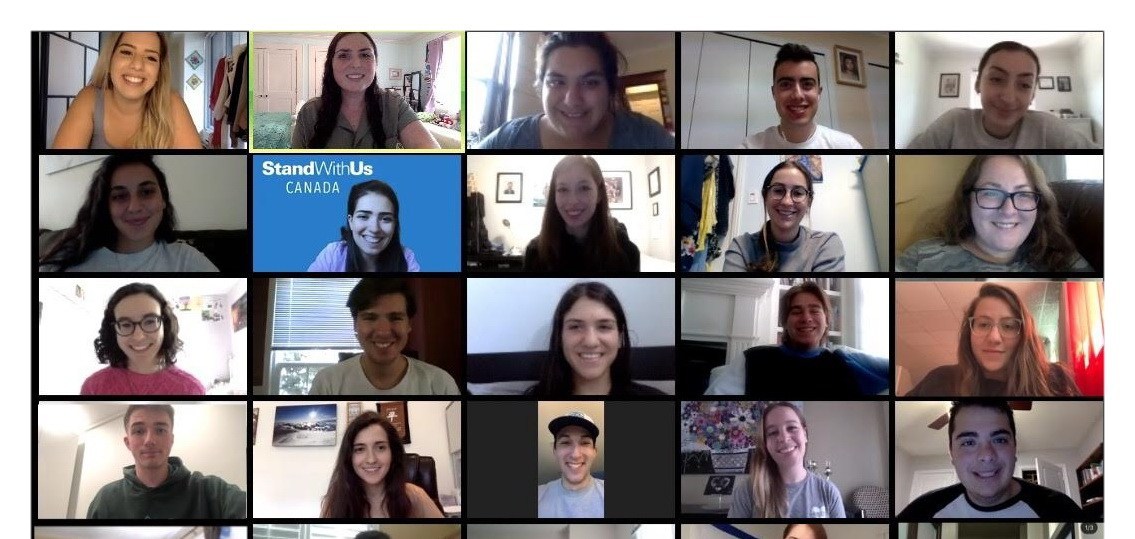
In early August, Hailey, Beata, and Pablo participated in the StandWithUs Emerson Conference, held via Zoom with over 100 university students across North America, who learned about Israel, education strategies, legal rights, combating the boycott and other campaigns against Israel, and more.
The sessions were important for Fellows to expand outreach and educate more students about Israel, said Beata, a fourth-year student studying towards her Bachelor of Business Administration (BBA) degree at York’s Schulich School of Business.
“Many students on campus simply do not know about Israel or have no opinion about it. As Fellows, it is important to educate the uninformed so they understand the importance of Israel. One way is by building relationships with other clubs so they can partner with the Jewish community for events,” Beata said.
Pablo Gonzalez, a third-year biotechnology student at York University, took part in the StandWithUs Canada Insight Program. Through this opportunity, Pablo traveled to Israel for 10 days and gained first-hand knowledge about the country’s current geopolitical situation.
Travelling across the country, the undergraduate students met with Jewish, Christian, and Muslim locals and community leaders to learn about their perspectives on current political issues.
“I never visited Israel before, and the diverse ethnic, religious, and political spectrum of the country impressed me,” recalled Pablo. “Through these experiences, I learned so much about the people of Israel, and gained an appreciation for the political nuances and intricacies that are too often described in the media as black-and-white. I left this trip with a deeper understanding and appreciation for the Israeli government in ensuring Israel is a safe and welcoming home for all.”
After returning home to Toronto and feeling strongly about wanting to make a positive change based on his experiences in Israel, Pablo applied to the StandWithUs Canada Hispanic Emerson Fellowship. Now, he’s sharing his Israel experiences on campus and educating his peers about the country’s challenges and accomplishments.
Despite strong antisemitic sentiment among some students and faculty at York University, and protests that turned violent last autumn, Pablo said he is “convinced that furthering education about Israel is vital to build a safer campus where we can discuss diverse perspectives with mutual respect.”
Even though the Emerson conference took place virtually, “it had an enormous impact on the students by inspiring and supporting them to continue to educate about Israel,” he said.
Hailey Merten a fourth-year social work student and StandWithUs Canada Emerson Fellow at York University, has faced institutionalized discrimination because of her Jewish identity. What she learned from the conference is that she is not alone in the battle.
“I have my StandWithUs Canada family beside me to support me through the good and bad times I may face,” she said. “The understanding that I am no longer alone when dealing with antisemitism on campus is such a relief.”
By organizing events with StandWithUs Canada in which students of differing views on Israel can discuss their opinions constructively and civilly, Pablo, Hailey and Beata look forward to building bridges between communities and focusing on shared solutions on campus.
Steven Greenwood is the executive director of StandWithUs Canada.
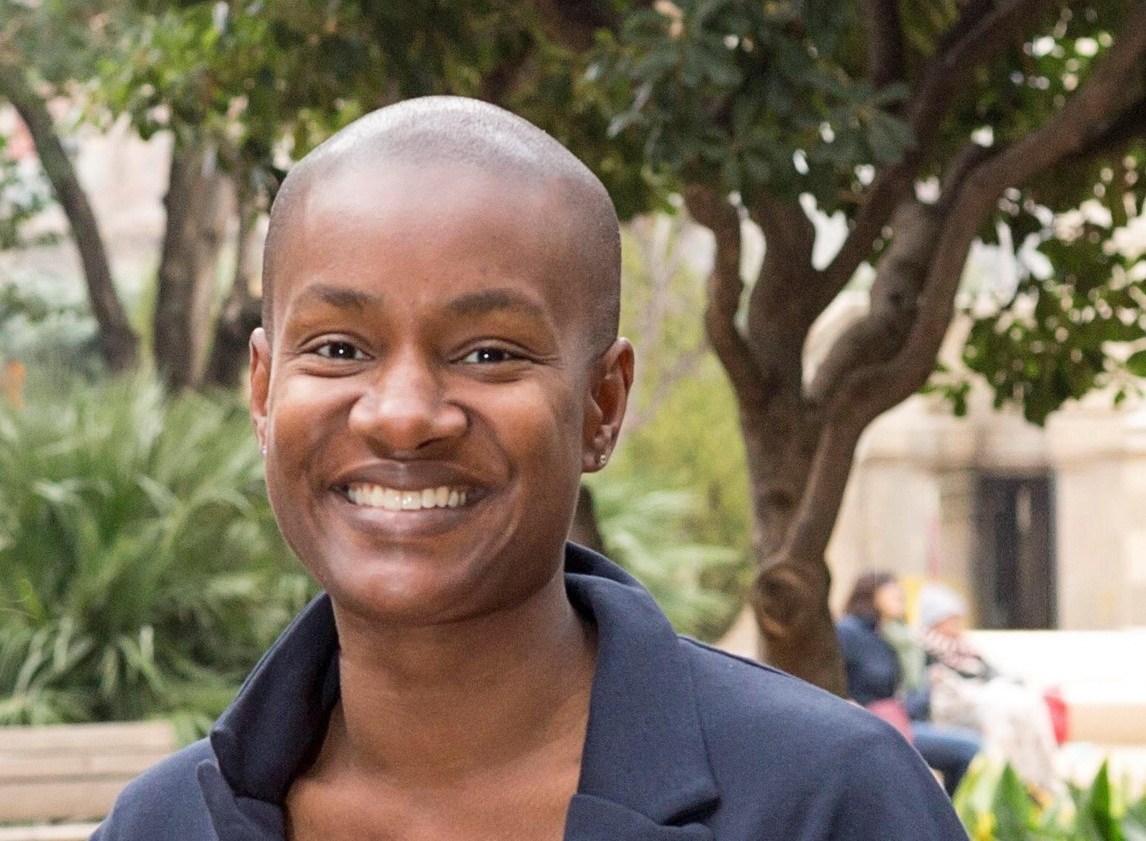
Annamie Paul has made history by becoming the first Black and female Jewish leader of a political party in Canada.
Over the weekend, Paul captured the leadership of the Green Party of Canada after a nearly year-long race to replace Elizabeth May.
Annamie Paul
Paul, 47, defeated seven other candidates for the leadership. She polled 12,090 votes against her closest competitor, Dimitri Lascaris, who received 10,081 votes after eight rounds of voting.
“You have matched a leader to the challenges of this time,” Paul said in her victory speech. “We need to match the party to the needs of this moment. That party is the Green Party of Canada. We are the party for this moment.”
Other political parties “are simply out of ideas. They are intellectually exhausted. This is a moment that demands daring, courageous leadership and this is something that we simply didn’t see in the last speech from the throne,” Paul said. “I only heard empty words.”
Born in Toronto to Caribbean immigrant parents, Paul underwent an Orthodox Jewish conversion 20 years ago. Her husband is Jewish and they have twoteenage sons.
There has not been a Jewish leader of a federal political party since David Lewis led the NDP from 1971 to 1975.
“I think this country has been ready for some time to elect more diverse politicians,” Paul told the CJR in June. “I think minorities are as electable today as white men when they run for the right parties and the right areas.”
Paul will run in the Oct. 26 byelection in the riding of Toronto Centre, which was vacated after the abrupt resignation of former finance minister Bill Morneau. She lost to Morneau in the same riding in the last election.
In addition to a law degree from the University of Ottawa, Paul earned a masters degree in public affairs from Princeton University.
She told the CJR last summer that she joined the Green Party because she feels its core values – ecological awareness, non-violence, social justice, sustainability, participatory democracy and respect for diversity – best reflect her Jewish beliefs.
“I’ve spent a lot of time over the years thinking about what makes good public policy,” she said. “When I think about my life as a Jewish woman, these are the ideas that have guided me.”
Paul said she found particular reflections of Jewish values in the party’s commitment to social and economic justice and environmental sustainability.
“It is a very Jewish idea that when you save a life, you save an entire world,” she said. “These are values that show a profound respect for human life.”
She was the subject of racist and antisemitic attacks during the leadership campaign. At a virtual town hall, commenters used the ‘N’ word several times and referred to her and another candidate as a ‘f-ing Jew’ in a live chat.
“Most of the attacks, most of the online hate that I’ve received has really been targeted at my Jewish identity,” Paul told Global News prior to the leadership vote. The attacks were “an unrelenting onslaught of comments and commentary and trolling online.
“And so as a Jewish person and as a Black woman, that kind of prejudice isn’t surprising….It still takes you aback — you never really quite get used to it.”
The Green Party’s relationship with Canada’s Jewish community was strained in August 2016, when the party passed a resolution supporting the boycott, divestment and sanctions (BDS) campaign against Israel. As a result, May said she was seriously considering resigning asleader.
Four months later, the party said it “explicitly rejects the notion of boycotting the state of Israel. The Green Party does not endorse the formal BDS movement, as it does not include supporting the right of the State of Israel to exist.”
At the same time, however, the party said it supports “only non-violent responses to violence and oppression, including economic measures such as government sanctions, consumer boycotts, institutional divestment, economic sanctions and arms embargoes.” It also condemned “illegal Israeli settlements.”
Paul would not tell the CJR whether she endorses that position, only that she continues to advocate for dialogue “as the preferred means for the resolution of the conflict.”
She said she supports a two-state solution in the Israel-Palestine conflict and feels dialogue is the only solution to the strife that has marked that part of the world.
“There has been violence in both directions,” she said “This is not a one-sided conflict. Around the world bitter, bitter enemies have eventually sat down around the table to discuss their differences. Israel must do everything it can to support those opportunities for dialogue.”
Paul favours a national ban on fracking and protecting 50 percent of Canada’s natural landscapes by 2050. She has said she wants to tackle systemic racism in the RCMP, and implement a guaranteed livable income and a universal pharmacare program, among other progressive initiatives.
Before jumping into federal politics, Paul worked as an advisor at the International Criminal Court in The Hague and as a political officer in Canada’s mission to the European Union in Brussels.
She has served as the Green Party’s international affairs critic.
Second-place finisher Lascaris has achieved a certain notoriety in Jewish circles. An activist and lawyer, he has represented several pro-Palestinian causes, including the annual al-Quds Day rally in Toronto and efforts to abolish labeling of products from Jewish settlements as “Made in Israel.”
In 2018, Prime Minister Justin Trudeau lambasted Lascaris for “vile antisemitic smears” after Lascaris accused two Jewish members of Parliament, Michael Levitt and Anthony Housefather, of being “more devoted” to Israel than to Trudeau and the Liberal caucus.
In 2016 Lascaris was turfed as the party’s justice critic for publicly criticizing the leader of the British Columbia Greens, who had been critical of his party for considering the BDS resolution earlier that year (which Lascaris had enthusiastically endorsed).
Reportedly, Lascaris was endorsed for the Green Party’s leadership by Pink Floyd co-founder Roger Waters and Rabbi David Mivasair of Hamilton, Ont.
Lawmakers from five countries have joined forces to launch an international effort to fight online antisemitism.
The Inter-Parliamentary Task Force to Combat Online Antisemitism includes legislators from Canada, Australia, Israel, the United Kingdom, and the United States.
Anthony Housefather
The effort involves two Canadian MPs: Liberal Anthony Housefather from Montreal, and Conservative Marty Morantz from Winnipeg, as well as former Toronto Liberal MP Michael Levitt, now President and CEO of Friends of Simon Wiesenthal Center.*
“Over the last several years, there has been an alarming increase in antisemitic incidents across the globe, with many originating online,” a Sept. 29 statement from Housefather’s office states. “As social media posts do not stop at international borders, members of the national legislatures of Australia, Canada, Israel, the United Kingdom, and the United States have come together across party lines to launch the Inter-Parliamentary Task Force to Combat Online Antisemitism.”
Marty Morantz
Task force members include: Member of Knesset Michal Cotler-Wunsh (Blue and White, Israel); Congresswoman Debbie Wasserman Schultz (Democrat, United States); Congressman Ted Deutch (Democrat, United States); Congressman Chris Smith (Republican, United States), Member of Parliament Josh Burns (Labour, Australia); Member of Parliament Dave Sharma (Liberal, Australia); Member of Parliament Andrew Percy (Conservative, United Kingdom); Member of Parliament Alex Sobel (Labour and Cooperative, United Kingdom), and the two Canadians MPs.
The launch of the task force follows campaigns working to expose online antisemitism, including the #NoSafeSpaceForJewHate campaign that served as a global call to action to combat the virulent antisemitism that goes unaddressed or inadequately addressed on social media platforms.
The task force has the following goals:
• Establishing consistent messaging and policy from Parliaments and legislatures around the world in order to hold social media platforms, including Twitter, TikTok, Facebook, and Google, accountable;
• The adoption and publication of transparent policies related to hate speech;
• Raising awareness about antisemitism on social media platforms and its consequences in order to acknowledge the tremendous responsibility that comes with the power the platforms hold;
• Emphasizing that if one minority cannot be protected by hate speech policies, then none can be. This Task Force will therefore serve as a means for protecting all minority groups from online hate;Underscoring that the fight against antisemitism is a non-partisan consensus in democratic countries.
Online hate, including antisemitic animus, “is growing exponentially,” stated Housefather. “Posts are viewed across national borders and impact people in many jurisdictions. Social media platforms have failed to adequately address hatred on their own. But they cannot be expected to create different policies in every separate country. By working together, we can create international definitions and recommendations for regulating social media platforms that can then be reviewed and hopefully implemented by each individual country.”
Stated Morantz: “Online hate is an abhorrent reality on social media platforms. I am honoured to work on a bipartisan basis with my Canadian colleagues, as well as international colleagues, to find solutions that keep all those safe who might suffer from online hate, antisemitism and discrimination.”
Said Cotler-Wunsh, daughter of former Canadian justice minister Irwin Cotler, “Always and at this time in particular, as we stand united in fighting a global pandemic, another virus rages that requires global collaboration and cooperation. By working with multi-partisan allies in parliaments around the world, we hope to create best practices and real change in holding the social media giants accountable to the hatred that exists on their platforms. It is imperative that we work together to expose the double standards.”
* The above updates Canadian members of the task force.
Sept. 22, 2020 – As expected, the City of Barrie has adopted the International Holocaust Remembrance Alliance (IHRA) definition of antisemitism, after withdrawing the motion a month earlier for further consideration.
City council on Sept. 21 unanimously adopted a resolution that Barrie endorse the IHRA working definition of antisemitism, as codified at the IHRA plenary in May 2016.
Jeff Lehman, Barrie Mayor
It was the same resolution Barrie Mayor Jeff Lehman withdrew at the 11th hour last month just before it was to go before the city’s General Council.
Lehman and members of council had received some 200 letters and emails, the vast majority from outside Barrie, opposing adoption of the IHRA definition, alleging its acceptance would stifle criticism of Israel and silence pro-Palestinian activism.
In a recent CJR interview, Lehman said he withdrew the measure party because he didn’t want council making a decision based solely on opposition to it.
The full council “needed to hear why this was important and to hear from our local community, which really hadn’t mobilized that way,” he said. “To be frank, I don’t think anybody really expected that degree of opposition.”
In the interim, Lehman said he received support for the definition’s passage from “well beyond the [local] Jewish community. We had a number of community leaders speak to city council, and send in letters and emails of support.”
Councillors heard from both sides Monday night.
Rabbi Audrey Kaufman of Barrie’s Am Shalom Congregation told council the definition is not an attempt to silence criticism of Israel, reported Barrie 360.
“The IHRA definition has nothing to do with Israeli politics,” Rabbi Kaufman said in her deputation. “It’s not pro-Zionist, pro-Israel or anti-Palestinian. It does not prevent anyone from criticizing Israeli policies.”
She said accepting the IHRA definition “creates a sense of protection for the Barrie Jewish community. It is proof to us that expressions of hatred toward Jews will not be tolerated in this city and we have our municipal government’s full support,” Barrie 360 reported.
Critics of the IHRA definition called it counter-productive and said it has already been used to stifle Palestinian causes, including in this country.
The definition “has been used time and time again by its pro-Israel backers to silence voices for Palestinian human rights,” said Independent Jewish Voices of Canada, which led the charge against the measure.
In a statement, Noah Shack of the Centre for Israel and Jewish Affairs said that by adopting the resolution, the city “has sent a clear message: There is no place for antisemitism and hate in Barrie.”
Statistics Canada data confirm an “alarming trend of Jews being the country’s most frequent target of hate crime,” Shack continued. “This is not just a problem for Jewish communities – it harms society at large. The adoption of the IHRA definition is an important step in addressing this scourge. After all, you can’t effectively solve a problem if you can’t properly identify it.”
The definition has been endorsed by 35 countries, including Canada, and, according to CIJA, by the European Parliament and the United Nations. A bill incorporating the IHRA wording is before Ontario’s legislature.
Last week, the City of Brampton endorsed the IHRA definition of antisemitism.
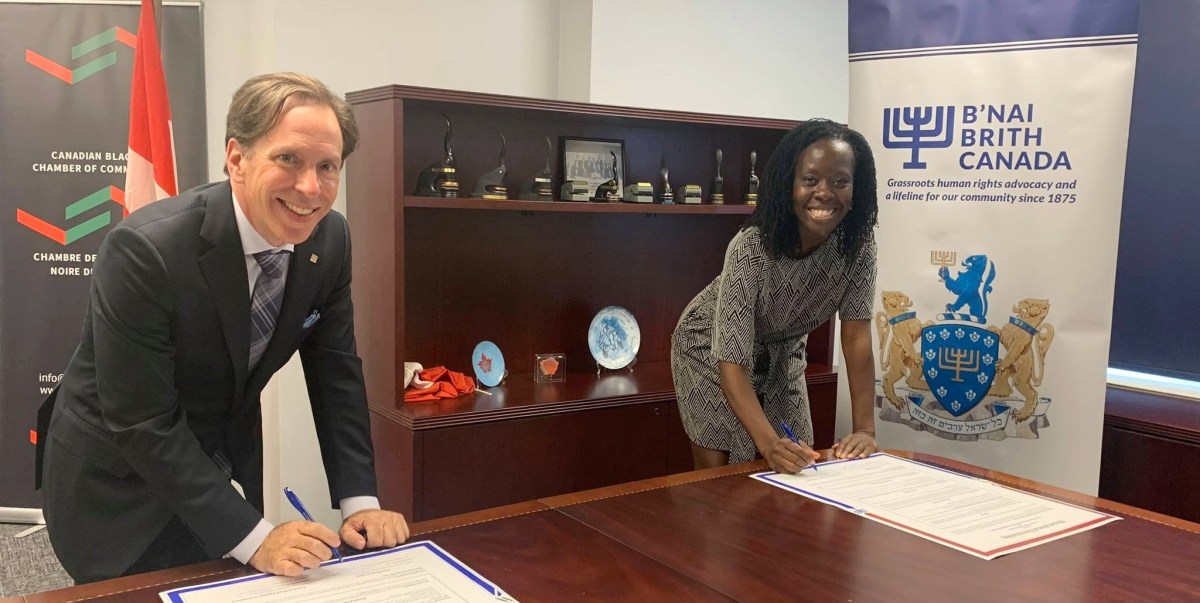
The deal, signed in a special ceremony Sept. 16 in Toronto, commits both groups to share their knowledge and strategies for attacking their common problem.
“It is easy to get swept up in the divisiveness rhetoric that that often accompanies political discussions,” said B’nai Brith CEO Michael Mostyn. “We are coming together today to reject divisiveness and together forge an uplifting, positive and concrete path for the future of our communities.”
Andria Barrett, president of the two-year-old Canadian Black Chamber of Commerce (CBCC), said B’nai Brith’s long history of advocating for the Jewish community will help her organization in its struggle.
“We see B’nai Brith as an ally in our quest for equality, equity and opportunity,” she said. “This is an important partnership that will amplify the efforts of both organizations.”
B’nai Brith, Barrett said, “has demonstrated time and again that [it is] skilled at advocacy.”
Canada’s Black and Jewish communities have a long history of working together. When the National Association for the Advancement of Colored People was formed in 1909 in Niagara Falls, Ont., and in the infancy of the 1960s civil rights movement of Martin Luther King Jr., Jewish groups marched with their Black neighbours.
“For generations Jewish Canadians and Black Canadians have stood side-by-side in our efforts to oppose discrimination and build a brighter future,” Mostyn said.
That support famously included Rabbi Abraham Joshua Heschel marching arm-in-arm with King. Another involved Hamilton Rabbi Eugene Weiner, who organized a group of local clergy to fly to Selma, Alabama, where images of white police attacking peaceful protesters ignited a wave of protest.
Despite sharing goals and methods, the relationship between the communities has always been informal. Now, the leaders said, swelling anti-Black racism in the United States and antisemitism growing around the world made a formal alliance important.
“After the horrific killing of George Floyd in Minneapolis, we realized we were at a turning point in our history,” said Aubrey Zidenberg, chair of the Special Advisory Committee to the League for Human Rights.
“Both the Jewish and Black communities have suffered through years of racism, injury and exclusionary policies,” he said. “Together we can collectively achieve great things in this magnificent country of ours.”
Beyond protest marches and briefs to government, both groups hope to use their shared skills to foster positive growth in the country. A special focus will be on efforts to improve the economic situation of marginalized communities.
“It is far too easy, especially in these troubling times, to complain and yell and scream and sometimes to bring things down without having answers for some very serious societal problems,” Mostyn said. “We are both looking to make a real difference across this country.”
The City of Barrie, Ont. is one step closer to adopting the International Holocaust Remembrance Alliance’s (IHRA) definition of antisemitism, a month after it unexpectedly withdrew the motion.
Meeting virtually on Sept. 15, the city’s General Committee quietly passed a resolution to adopt the IHRA working definition of antisemitism. The measure now heads for ratification by city council, which meets Monday, Sept. 21, when members of the public can have their say.
The motion was identical to one that its sponsor, Barrie Mayor Jeff Lehman, withdrew at the 11th hour last month after he and council members received a slew of letters and emails opposing its adoption.
Independent Jewish Voices of Canada (IJV), which supports the boycott, divestment and sanctions campaign against Israel and vehemently opposes the IHRA definition, boasted in August that “well over 100” of its members and supporters sent letters and messages to Barrie city councillors urging them to vote against the resolution.
Jeff Lehman, Barrie Mayor
In a CJR interview, Lehman conceded he put the item on the agenda last month “without a lot of broader discussion in the community, in part because it was the middle of the summer.”
Concern about the motion was raised after he and council members received about 200 messages opposing its adoption – “obviously a coordinated campaign by certain groups.”
Lehman said he didn’t want council making a decision based only on that.
“They needed to hear why this was important and to hear from our local community, which really hadn’t mobilized that way,” he said. “To be frank, I don’t think anybody really expected that degree of opposition.”
After the resolution was withdrawn, Lehman’s office told the CJR the motion was shelved “following a large number of requests from the Jewish community in Barrie for further consultation.”
Lehman confessed to being “a little confused by that language. I wanted to provide the time for that consultation, and I was concerned we hadn’t heard it.”
However, over the past month, he received “extensive correspondence” from the local Jewish community supporting the IHRA resolution.
In fact, that support “went well beyond the Jewish community,” Lehman added. “We had a number of community leaders speak to city council, and send in letters and emails of support.”
He said almost none of the letters and emails urging Barrie to defeat the IHRA resolution were from residents. “Of the nearly 200 emails, I believe only three that I received were from local residents.”
Should Barrie’s council pass the measure, it would join the Quebec cities of Westmount, Cote St.-Luc and Hampstead, and Vaughan, Ont., all of which have endorsed it.
As of this summer, the definition has been adopted or recognized by 18 countries. Last year, the federal government endorsed the definition as part of its anti-racism plan.
A bill before Ontario’s legislature on combating antisemitism, which contains the IHRA definition, passed second reading earlier this year and is headed to committee for public input.
IJV of Canada and other groups have called the IHRA definition “dangerous,” claiming its acceptance would stifle criticism of Israel and silence pro-Palestinian activism.
That concern is “certainly not supported by the language I see,” Lehman said, pointing out that the definition states that “criticism of Israel similar to that leveled against any other country cannot be regarded as antisemitic.”
On Monday, members of the public will be given five minutes each to make their views known.
David Shron, president of Barrie’s 63-family member Am Shalom Congregation, said someone representing the synagogue will address council in support of the IHRA motion.
He told the CJR that many of the messages sent to the mayor and council members opposing the measure came from outside Ontario.
In the past month, city officials were “inundated with information from people who actually know what’s going on in our local community.”
Shron said he was “very happy” the resolution was approved by the General Council, adding, “I don’t expect it having a major problem” before council.
The 2011 National Household Survey showed there were 660 Jews in Barrie.
MONTREAL – Dark since March, the Segal Centre for Performing Arts stage will light up again before the end of the year.
The Segal will present American playwright Glen Berger’s one-man drama Underneath the Lintel in December in its main theatre, marking the opening of a season that is expected to be a mix of live and online programming.
This is a co-production with Theatre du Nouveau Monde (TNM), the Segal’s first collaboration with the venerable Montreal theatre, and the French section of the National Arts Centre in Ottawa.
The downtown TNM presents the play in French translation as Zebrina: Une piece a conviction in September. The same actor, Emmanuel Schwartz, and director, Francois Girard, headline both productions. Girard is a distinguished Quebec cultural figure, best known as the director of such films as The Red Violin, an Academy Award winner, and last year’s Holocaust-themed The Song of Names.
Segal artistic director Lisa Rubin said between about 65 and 95 people can be accommodated in the 300-seat main theatre to comply with Quebec’s physical distancing directives. The exact number at each performance will be based on how many patrons come from the same household and can sit together, she explained.
An online option will also be offered. The dates of the run are still to be determined, but Rubin expects tickets to go on sale in October.
The Segal had to abruptly cut short the last season midway through the musical The Times They are A Changin’ on March 12 when the government banned indoor gatherings of over 250 people. That directive presaged the province’s full-scale lockdown announced two days later.
There were two plays remaining in the 2019-2020 subscription series, including the acclaimed Oslo in its Montreal English-language premiere.
On top of that, Rubin was just about to announce the six-play lineup for the coming season that would have started this fall, which was abandoned due to the uncertainty of the times.
On Aug. 3, the government gave the green light to performance venues to host audiences of up to 250 people, seated at least 1.5 metres apart.
French theatres in Montreal, unlike most English ones in Canada, are mounting new seasons, and that proved fortuitous for the Segal, Rubin said.
There is Jewish content in Underneath the Lintel and TNM’s artistic director Lorraine Pintal contacted the Segal for guidance on handling it.
Since its premiere in 2001 in Los Angeles, Underneath the Lintel has been produced widely, sometimes stirring controversy. The sole character, a Dutch librarian, goes on an international quest to solve the mystery of a travel guide, returned anonymously – 113 years overdue. The legend of the Wandering Jew, commonly viewed as a figment of Christian anti-Semitism, is woven into the unfolding story.
From there quickly grew the idea of staging the play in its original English at the Segal.
The shutdown has been devastating for the Segal and the many people who rely on it for their livelihood, but Rubin assured that its survival is not in jeopardy.
She said over 100 contracts with actors, crew and others involved with the cancelled season had to be broken, and the Segal’s own staff has been reduced to a “small team.”
Federation CJA, of which the Segal is an agency, withdrew its funding, a decision Rubin accepts was necessary in order to reallocate resources to the community’s most pressing needs during the pandemic crisis.
The Segal continues to receive money from the three levels of government, but that amounts to less than $200,000. It has an endowment that will help see it through to better times, said Rubin, but support from donors and patrons is still crucial.
She made clear that the Segal family is not going to bail out the centre.
“Their job is done; they are not going to rescue us. It’s up to the community and our audience now.”
For now, Rubin is focused on getting the Segal physically ready to welcome back its audience after a long “intermission.” Although all safety precautions will be in place, she promises that theatre-going in the age of COVID can be fun.
“This has been devastating for the cultural sector. There is no precedent for what we are going through,” she said. “We are writing our own script for this.”
Sept. 2, 2020 – Who is Kerry Lynne Findlay and what did she do to anger so many Canadian Jews (and others)?
Findlay is the Conservative member of Parliament representing South Surrey—White Rock in the Greater Vancouver area. She’s a one-time parliamentary secretary to the Minister of Justice and served for two years in the Stephen Harper government as Minister of National Revenue.
Today, she is the Conservative environment critic who should have known better.
Last week, Findlay re-tweeted a short video of a 2009 interview then journalist Chrystia Freeland, now the finance minister, conducted with philanthropist and investor George Soros for the Financial Times. That in itself would not have raised many eyebrows, except that Findlay did a deep dive into the wild world of antisemitic conspiracy theories that place Soros at their centre.
About Freedland and Soros, Findlay had this warning: “The closeness of these two should alarm every Canadian.” Fellow Conservative MP and finance critic Pierre Poilievre duly re-tweeted Findlay’s post.
Soros is seen by the underbelly of conspiracists – QAnon currently leading that pack – as nothing short of attempting to control the world, and as the embodiment of evil for donating to progressive causes.
According to the largest organization focused on fighting antisemitism, the Anti-Defamation League, Soros “has become a lightning rod for conservative and right-wing groups who object to his funding of liberal causes.” In far right circles worldwide, the ADL continues, Soros’ philanthropy is “often recast as fodder for outsized conspiracy theories, including claims that he masterminds specific global plots or manipulates particular events to further his goals.”
Many of those conspiracy theories employ longstanding antisemitic tropes, particularly that rich and powerful Jews lurk behind the scenes, plotting to control countries and manipulate global events, the ADL explains.
Soros is Jewish and a child survivor of the Holocaust. It was his survival that drove him to succeed, and he has become one of the wealthiest people in the world. He has also devoted his life and, it’s been estimated, more than $30 billion to following the Jewish dictum to make the world a better place.
Today, at age 90, Soros has become a hero to racial and ethnic minorities and those demanding necessary changes to the human condition.
The good news is that there was strong pushback from all sectors of Canadian society against Findlay’s tweet. Jewish organizations, the Canadian Anti-Hate Network, and many on Twitter criticized Findlay loudly and passionately. To her credit, she did offer an apology – of sorts.
Again using Twitter, Findlay wrote:
“Earlier today, I thoughtlessly shared content from what I am now learning is a source that promotes hateful conspiracy theories. I have removed the tweets and apologize to anyone who thinks I would want to endorse hateful rhetoric.”
Kerry-Anne Findlay
This is a good start, but not nearly enough. Anytime Jews are connected to mindless conspiracy theories emanating from the far right, they are placed at risk. Findlay needs to go further and explain the context, reference the Jewish community, and let Canadians know the danger faced by Jews daily. A good word about the work of Soros helping countless individuals and causes would go a long way.
We must also add that Poilievre, as of this writing, has remained silent, as has newly-minted Conservative leader Erin O’Toole. Both could use this opportunity to speak out forcefully against Jew-hatred, but to date, have not.
Hate crime statistics consistently show that Canadian Jews remain the number one victim of haters and bigots. Surely Findlay’s response should reflect this reality, and both Poilievre and O’Toole would be wise to join the chorus against hate.
There’s always the tired old charge that Jews over-react to every little thing, and maybe this is one of them. Trust us: It’s better than the opposite.
Addendum:
According to a report in the Globe and Mail on Sept. 3, O’Toole said he learned of the issue after Findlay’s tweet had been deleted, adding that he spoke with some Jewish leaders to say that the Conservatives are a strong voice against antisemitism.
Aug. 31, 2020 – Canadian Jewish advocacy organizations are urging Facebook to clamp down on extremist activity and hate speech.
Some 145 Jewish and Zionist organizations around the world sent an open letter this month to the social media giant, urging it to “fully adopt” the International Holocaust Remembrance Alliance (IHRA) working definition of antisemitism as the “cornerstone of Facebook’s hate speech policy regarding antisemitism.”
Canadian signatories to the letter include B’nai Brith Canada, the Centre for Israel and Jewish Affairs (CIJA), the Raoul Wallenberg Centre for Human Rights, and Students Supporting Israel.
The letter, sent to the company’s board of directors, noted that Facebook’s Director of Content Policy Stakeholder Engagement, Peter Stern, “recently attested to the usefulness of the IHRA working definition when Facebook first developed its hate speech policy.
“However, Mr. Stern admitted that Facebook does not have a policy aimed at combatting online anti-Semitism,” the letter alleged. “He further admitted that Facebook does not embrace the full adoption of the IHRA working definition because the definition recognizes that modern manifestations of antisemitism relate to Israel.”
Nearly 40 countries have already endorsed or adopted the IHRA working definition in some official capacity, either through their membership in the IHRA or independently, the letter noted.
Canada adopted the IHRA wording last year as part of an anti-racism policy. So have several Canadian cities, while others have either shelved or withdrawn efforts at adoption amid accusations that it would stifle criticism of Israel.
The letter came amid growing concern from Jewish groups worldwide that Facebook is allowing Holocaust deniers room to expresstheir views.
Today’s antisemitism “undoubtedly includes the delegitimization of Israel’s right to exist,” the letter goes on. “This bigotry is expressed in various ways, such as the rejection of Jewish self-determination, Holocaust revisionism and denial, and the application of double standards toward the Jewish state and people.”
Adopting the IHRA definition would provide Facebook “an effective, neutral, and nuanced tool to protect Jewish users from hate speech and imagery that incites hate and oftentimes leads to violence,” the letter argues. “While the impact of online hate speech, misinformation, and disinformation on our society continues to be researched and explored, we cannot afford to lose any more time in fighting this bigotry and preventing violence.”
The City of Barrie, Ont., has become the latest municipality to withdraw adoption of the International Holocaust Remembrance Alliance’s (IHRA) working definition of antisemitism.
A motion to adopt the IHRA’s widely-accepted definition of antisemitism was to be considered by Barrie’s General Committee on Aug. 10.
According to the city’s website, the General Committee is comprised of all members of council, and the mayor presides. The committee’s duties include studying and reporting to council on matters brought to it by smaller “reference” committees.
The IHRA motion was sponsored by Mayor Jeff Lehman. But Lehman withdrew it hours before it was to be debated.
Jeff Lehman, Barrie Mayor
In a statement emailed to the CJR, Lehman explained his change of heart: “Following a large number of requests from the Jewish community in Barrie for further consultation, the motion was withdrawn in order to allow for this discussion.”
Independent Jewish Voices of Canada (IJV), which supports the boycott, divestment and sanctions campaign against Israel, boasted in a statement that “well over 100” of its members and supporters sent letters to Barrie city councillors urging them to vote against the IHRA motion.
In a letter Aug. 12 to Lehman and Ward 2 councillor Keenan Aylwin, Rabbi Audrey Kaufman, spiritual leader of Barrie’s Am Shalom Congregation, said she hopes that withdrawing the resolution “does not mean that this motion is being laid to rest. I hope that you will quickly move forward with making the right decision of passing this motion.”
The motion to adopt the IHRA definition was endorsed by local rabbis in Barrie “and represents a crucial educational tool for local authorities to address anti-Semitism,” according to Noah Shack of the Centre for Israel and Jewish Affairs (CIJA).
“We are confident that the mayor and the council will do the right thing,” Shack told the CJR.
Shack said CIJA has been “engaging” with Lehman “for an extended period” about the need to combat antisemitism, particularly following an incident in June at Berczy Park, in which playground equipment was daubed with swastikas and other Nazi symbols. Barrie police arrested and charged a 50-year-old man with nine counts of mischief under $5,000.
The 2011 National Household Survey showed there were 660 Jews in Barrie. There an active branch of Chabad.
Barrie now joins Montreal, Vancouver and Calgary, where measures to endorse the IHRA definition were withdrawn or postponed following protests that its adoption would stifle criticism of Israel and squelch support for Palestinian rights.
The Quebec towns of Westmount, Cote St.-Luc and Hampstead have adopted the definition, as has Vaughan, Ont. Last year, the federal government endorsed the definition as part of its anti-racism plan.
A bill before Ontario’s legislature supporting the IHRA definition passed second reading earlier this year and is headed to committee for public input.
According to Barrie’s website, the city has included as part of its 2018-2022 Strategic Priorities “fostering a safe and healthy community and building strong neighbourhoods…we have a shared responsibility to stop antisemitism in all its forms through education and public consciousness as antisemitic demonstrations continue to threaten communities and undermine democracy.”
The resolution before the General Committee pointed out that the IHRA is an intergovernmental organization founded in 1998 that consists of 34 countries, including Canada, “each of [which] recognizes that international coordination is needed to combat antisemitism.”
It referenced Ontario’s Bill 168, the Combating Antisemitism Act, “which directly mentions IHRA” and passed second reading “with all-party support.”
Barrie “is enriched by its thriving, active and engaged Jewish and Israeli communities,” the resolution’s preamble stated.
The resolution resolved that Barrie adopt the IHRA working definition of antisemitism as endorsed at the IHRA plenary on May 26, 2016, as follows:
“Antisemitism is a certain perception of Jews, which may be expressed as hatred toward Jews. Rhetorical and physical manifestations of antisemitism are directed toward Jewish or non-Jewish individuals and/or their property, toward Jewish community institutions and religious facilities.”
Details are contained in the many examples of antisemitism listed by the IHRA. One of them “might include the targeting of the State of Israel, conceived as a Jewish collectivity,” the alliance explained. “However, criticism of Israel similar to that levelled against any other country cannot be regarded as antisemitic.”
IJV of Canada called the withdrawal of the “problematic” resolution in Barrie “another major victory for all who oppose antisemitism and support Palestinian human rights.”
While supporters of the IHRA definition have tried to present it as innocuous and legally non-binding, “they have also attempted to weaponize the definition in order to shut down freedom of expression in relation to Israel-Palestine,” IJV said in a statement to the CJR.
CIJA called the IHRA definition “the world’s most widely accepted definition of antisemitism.”
Last week, Canadian Jewish actor and filmmaker Seth Rogen, while promoting his new movie, An American Pickle, the saga of a poor Yiddish immigrant to New York City who is preserved in pickle brine for 100 years (based on a quirky story by Simon Rich, available here), discussed his Jewish identity and feelings about Israel.
You may have read about it: Rogen rejected an inherent link between Jewish identity and Zionism, called the idea of Jewish statehood the product of “an antiquated thought process,” and expressed dissatisfaction with the ways he – the son of two kibbutzniks and Jewish summer camp alumnus– was educated when it came to Israel.
I may disagree with Seth on a few points – I happen to think that as long as everyone else has a state, we should probably have one too – but this much is true: The way that our community teaches young Jews about Israel, Palestine – and the conflict just doesn’t square with historical records – and there is an instinct to exile and dismiss the Jews who ask frank and difficult questions about Israel.
The realities of the Aliyah movements, the British Mandate, the War of Independence, the wars of 1967 and 1973, intifadas, settlements, and countless failed peace processes, are too messy for one op-ed and one day. But in our day schools and summer camps, and our primary educational programs, they are simplified to create a vision of Israel that is blameless, perfect and miraculous – a vision far more naïve and utopian than even Herzl’s.
“We took a deserted land and made the desert bloom.” “We (out of the goodness of our own hearts) withdrew from Gaza and just look at what they did there.” “We accepted the Partition plan and they didn’t.”
It wasn’t until my final year of university, and my decision to write a thesis on the 2005 withdrawal from Gaza, that I – who had attended Hebrew school for nine years, was active in the local Jewish fraternity, president of Hillel, and had just participated in a Birthright Israel trip – learned, for instance, that the Israeli acceptance of the 1947 partition plan was far from unanimous, with Menachem Begin and the Revisionist Zionist camp calling it “illegitimate.”
During that year of research and writing, I encountered many pieces of information that directly and forcefully disproved many of the ideas that I had been raised with. I confronted the reality of a real country making political decisions and strategic military calculations.
I felt lied to. On many occasions, I was mere sentences away from abandoning my emotional stake in Israel altogether. On some days, the only thing stopping me from washing my hands of the whole messy falafel was a mentor who encouraged me to embrace the nuances and test my values against them.
Any conversation about the Jewish future has to include a frank, reasonable discussion about the role of Israel and its ability to represent Jews around the world. It is unsustainable for us, as a people, to continue mythologizing a real, complex place and exiling those of us who express dissatisfaction with realities once we learn them.
After all of that, after the threat of annexation, the continued attack of the rabbinate on progressive values, and much more, I remain a Zionist for this reason:
I am a Jew, and a Jew in a world that is dangerous and hostile to Jews: Israel, for all its faults, remains a place where Jews can be safe as Jews, an increasing rarity in 2020. While I am relatively safe as a Canadian Jew, I know far too much Jewish history to think that this safety is forever guaranteed.
But a small part of me, in the back of my head, knows that there is a second reason. I remain a Zionist because anything else risks alienation and condemnation. From my friends, my family, the community I grew up and worked in. From the Jewish Twittersphere.
I’ve been to Israel three times and I’d like to visit again in the future. In pre-coronavirus times, Israel has barred entry to, among others, Diaspora Jewish BDS activists. I’m not interested in taking a 12-hour flight only to get deported from a country that claims to be my homeland.
My Zionism is nuanced. It is critical, it is measured, and I do my best to keep it in line with history and the values with which I judge every other political issue in my life. But it is not the only thing that makes me a Jew. Far from it.
I’ve long been party to conversations – and handwringing – about the Jewish future. For a long time, assimilation and intermarriage were the boogeyman. Now, it’s insufficient (right-wing, reactionary, unquestioning) Zionism that gets one labeled as a traitor to the Jews.
The truth is, when we lie to our kids, they resent the lie as much as they resent us. The truth is, to ensure a Jewish future, we have to tell the truth about the Jewish past. And that means a conversation about Israel that’s rooted in reality and history, not myths and utopias. These questions are not going away, and will only get louder. The truth is, we ignore them – and dismiss young Jews with serious concerns – at our own risk.
Zack Babins is a Professional Jew and Recovering Jewish Professional™, an occasional political communicator and a constant seeker of attention.
July 15, 2020 – This week, the CJR queried Elections Canada about whether the agency will strip the status of the far-right Canadian Nationalist Party (CNP) or warn it against engaging in antisemitic rhetoric.
As noted in our editorial of July 15, the leader of the party, Trevor Patron, recently re-uploaded a video to social media (first posted last year) in which he called for “that parasitic tribe” to be “removed from Canada once and for all.”
Patron’s rant about “swindlers,” “snakes,” and “inside manipulators” – as well as a subsequent reference to “the synagogue of Satan” – “make his antisemitic agenda crystal clear,” the Centre for Israel and Jewish Affairs stated.
A flier posted on the CNP’s Facebook page is titled “Beware The Parasitic Tribe.” It includes quotations from the New Testament amid references to “inside manipulators” and stating, “everywhere these people go, they infiltrate the media, they hijack the central bank, and they infect the body politic like a parasite.
“If they had their way, our entire way of life would be eradicated.”
Canada’s Chief Electoral Officer conferred official party status on the CNP in September of last year. In the last federal election, the party ran three candidates and received 284 votes in all.
The following is the response from Elections Canada:
The Canada Elections Act, as drafted and enacted by Parliament, is agnostic when it comes to ideology or platform. Just as there is no mechanism under the Act allowing the Chief Electoral Officer to reject a new party’s application solely based on their [sic] ideology, there’s no legal mechanism that allows him to deregister a party for any reason not explicitly listed in the Act. Under the Act, a party can only be involuntarily deregistered (that is, not at the party’s own request) for the following reasons:
• A party will be deregistered if it fails to endorse a confirmed candidate at a general election. If a registered party is deregistered, its registered associations are also deregistered.
• The CEO may also deregister a registered party if it fails to:
¬ file statements confirming or amending the information in the Registry of Political Parties within 10 days of the writs being issued
¬ report on or before June 30 each year, confirming or amending the party’s information in the Registry of Political Parties
¬ report any changes to the information about the party in the Registry of Political Parties within 30 days of the change
¬ file an audited statement of its assets and liabilities within six months of its registration
¬ file the party’s audited financial transactions return for each fiscal period within six months of the end of the fiscal period
¬ file the party’s audited general election expenses return within eight months of election day
¬ file a statement setting out the dates of a leadership contest, varying the dates or cancelling the contest or
¬ file a report on a nomination contest within 30 days of the selection date
There are other pieces of legislation and frameworks that regulate the behaviour and discourse of individuals and groups in Canada, including the Criminal Code, but these are outside Elections Canada’s mandate.